


Ever paused mid sentence, stared at the word on your screen, and thought “wait, is that realy or really”? You are not alone. Millions of people hit this exact same wall every single day, usually while typing fast on a phone. The good news is the answer is simple, and by the end of this article you will never second guess it again.
Realy or Really – Quick Answer
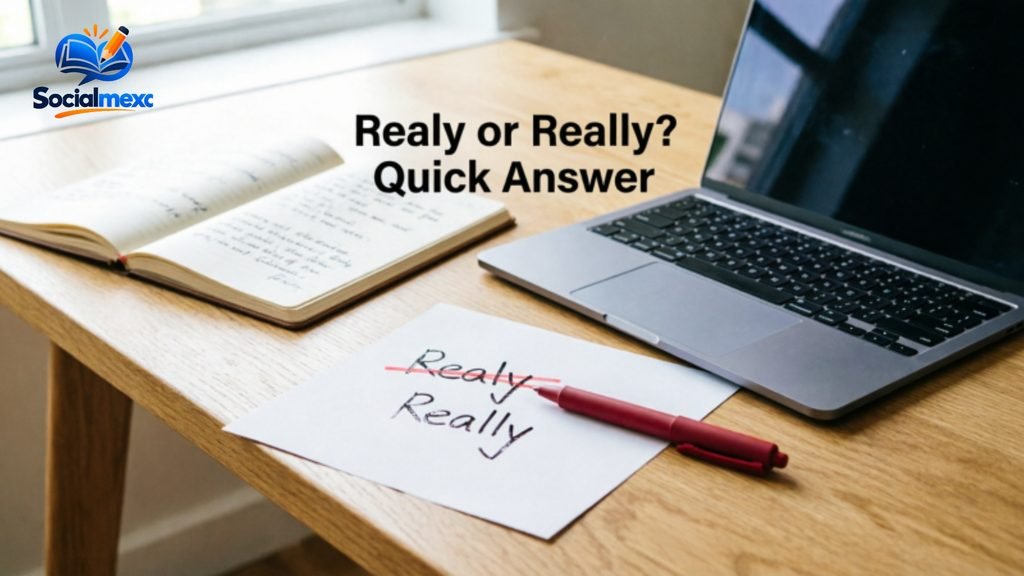
Really is the correct spelling. Realy is a common misspelling and it is not a recognized English word in any dictionary. If you want to say something is true, genuine, or to add emphasis, “really” is the only correct choice. Keep that in your back pocket and let’s dig into why this mix up happens so often and what you can do to stop it for good.
What Is “Realy”?
“Realy” is not a standard English word. It shows up almost entirely because of a typing slip, where one “l” gets accidentally dropped while typing quickly on a keyboard or phone. Dictionaries do not list it as a word, spell checkers flag it in red, and using it in formal writing will always come across as an error rather than a stylistic choice.
Some people also assume it might be a shortened or informal version of really, similar to how “thru” stands in for “through,” but that assumption is incorrect. There is no accepted informal version of really. There is only one correct spelling, and that is with two L’s.
What Is “Really”?
“Really” is an adverb used to express truth, emphasis, or genuine feeling. It modifies verbs, adjectives, and other adverbs to strengthen a statement. For example, “I really enjoyed the movie” adds emphasis to how much you enjoyed it, while “that is a really tall building” strengthens the adjective tall. It is one of the most frequently used adverbs in spoken and written English, appearing in casual conversation, professional writing, journalism, and academic work alike, though the tone it carries shifts depending on where you use it.
| Keep Reading These Articles |
| Skis or Skiis? Discover the Correct Spelling & Meaning |
| Proove or Prove? Find the Correct Spelling Fast |
| Salvadoran or Salvadorian? The Correct Word Explained |
Relay meaning
Here is where confusion often creeps in from a completely different direction. “Relay” is a totally separate word with its own distinct meaning, and it is easy to see why the two get mixed up visually even though they sound nothing alike out loud. As a verb, relay means to pass along information, like “please relay this message to the team” or “the coach relayed instructions through his assistant.”
As a noun, it refers to a race where team members take turns carrying a baton, like a relay race, or it can describe an electrical switch used in engineering. Relay and really share a similar letter pattern, which is likely why autocorrect sometimes gets confused between the two when someone types quickly.
Realy or really meaning
To sum up the meaning side clearly, “really” means genuinely, truly, or actually. It is used to confirm something is factual or to add weight to an opinion or statement. “Realy” carries no meaning at all because it simply is not a word, so if it shows up in a sentence, a reader will either interpret it as a typo or pause in confusion.
If you are trying to communicate that something is authentic, true, or worth emphasizing, “really” is doing all the work you need, and there is no substitute spelling that carries the same function.
How to Pronounce “Realy” vs. How to Pronounce “Really”

Since “realy” is not an actual word, it has no official pronunciation of its own, though people who misspell it are still trying to say “really” out loud in their heads. The correct pronunciation breaks down as “REE-uh-lee” in a slower, more deliberate delivery, or “REE-lee” when spoken quickly in casual conversation. Both are considered correct, and the difference mostly comes down to speaking speed and regional accent rather than formality.
British English Pronunciation of Really
In British English, really is often pronounced with a clearer separation between syllables, closer to “REE-uh-lee,” especially in more formal or slower speech patterns common in the UK. Regional British accents can shift the vowel sounds slightly, but the three syllable structure tends to stay intact more often than in American speech.
American English Pronunciation of Really
In American English, the word tends to get compressed in casual conversation, often sounding like “REE-lee,” with the middle syllable softened or nearly dropped entirely. This is especially common in fast paced, informal speech, though American English speakers will still pronounce the full three syllables in slower or more emphatic contexts, such as when expressing surprise.
Realy or really synonym
Looking for other ways to say really? Try these depending on tone and context:
- Truly
- Genuinely
- Actually
- Honestly
- Indeed
- Seriously
- Undoubtedly
Each of these swaps in nicely depending on how formal or casual your sentence needs to be, and rotating between them also helps your writing avoid sounding repetitive if you find yourself leaning on really too often.
The Origin of “Really”

The word really traces back to the adjective “real,” which entered English through Old French “reel” and ultimately from Latin “realis,” meaning relating to things, or actual. This Latin root itself descended from “res,” the Latin word for thing or matter, which shows up across many English words tied to concepts of substance and truth. Adding the suffix “ly” turned the adjective into an adverb, giving English speakers a grammatical tool to emphasize truth or genuineness within a sentence rather than simply describing something as real.
This transformation happened gradually over centuries as English absorbed and adapted Latin based vocabulary through French influence following the Norman Conquest, a pattern you will see repeated across hundreds of English adverbs that follow the same adjective plus ly structure, such as slowly, quickly, and carefully.
Realy or really examples
Seeing the word in action makes the correct usage stick much faster:
- “Did you really finish the whole project in one day?”
- “That restaurant is really good, you should try it sometime.”
- “I really appreciate your help with this, more than you know.”
- “Is this really happening right now?”
- “She really wanted to attend the concert but couldn’t get tickets.”
- “We really need to talk about the budget before Friday.”
Notice how “really” fits naturally before verbs, adjectives, and even whole clauses to boost emphasis without changing the core meaning of the sentence, just intensifying it.
British English vs. American English Spelling

Here is some good news for anyone worried about regional spelling differences tripping them up. Unlike words such as “colour” versus “color,” “realise” versus “realize,” or “travelling” versus “traveling,” really is spelled exactly the same in both British and American English. There is no regional variation to remember here, no extra letters to add or drop depending on your audience, which makes it one of the more forgiving and consistent words in the English language regardless of where your readers are located.
Which Spelling Should You Use?
Always use “really.” There is no context, region, dialect, or formality level where “realy” is acceptable, whether you are writing a casual text message to a friend, a formal business report, an academic paper, or a product review. If you ever see “realy” written somewhere, whether in a comment section or an email, treat it as a mistake to be corrected rather than an alternate spelling to consider using yourself.
Common Mistakes with “Really”
Even native speakers slip up sometimes, and it is worth knowing exactly where the confusion tends to happen:
- Dropping the second “l” and writing “realy” out of typing speed
- Confusing it with “real” when an adjective is needed instead of an adverb, as in “that is real nice” instead of “that is really nice”
- Mixing it up with “relay” due to visual similarity, especially in quick typing
- Overusing “really” in formal writing where a stronger, more specific word choice reads better
- Writing “really really” for emphasis instead of choosing a single, more powerful word like extremely or incredibly
- Using “really” to modify a noun directly, which is grammatically incorrect since really is an adverb, not an adjective
Why Do People Misspell “Realy or Really”?
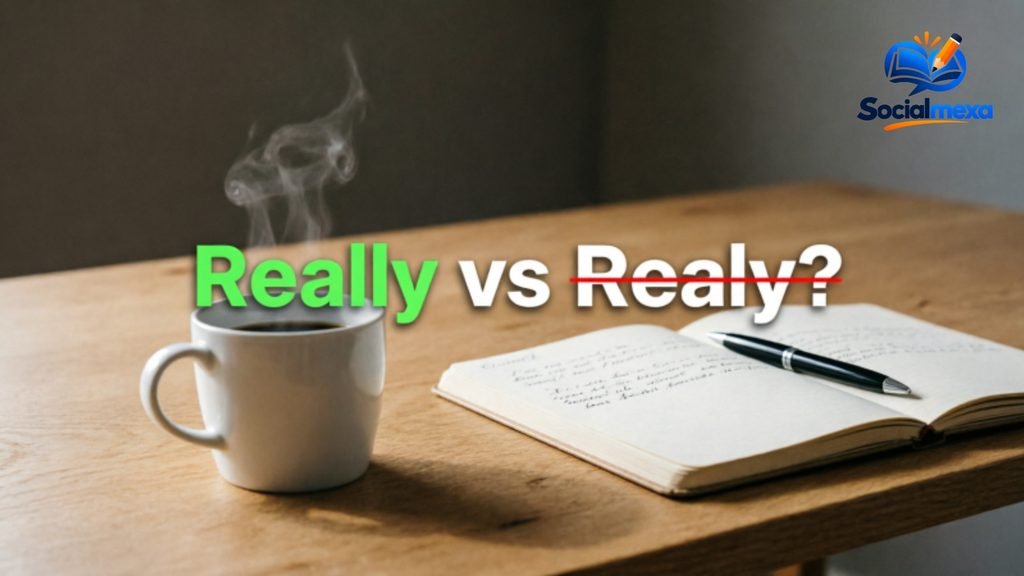
The misspelling usually comes down to typing speed rather than a lack of knowledge. When typing fast on a phone or keyboard, your fingers can easily skip a repeated letter, especially with double letter words like really, fully, silly, or funny, where the brain processes the sound as one unit even though it is written with two letters.
Autocorrect sometimes catches the error and fixes it automatically, but not always, depending on the app, the keyboard settings, and whether the word has been typed incorrectly enough times that the system starts to learn it as intentional. There is also a smaller group of people who simply never fully absorbed the correct spelling growing up and picked up the habit from reading other people’s typos online in comments, texts, or social media captions, which then reinforces the mistake over time through repeated visual exposure.
How to Remember the Correct Spelling of “Really”
Here is a trick that actually works and sticks in your memory. Break the word into two familiar chunks, “real” plus “ly.” You already know how to spell “real” without any hesitation, so just add “ly” at the end and you get “really,” with both L’s intact because one comes from the end of “real” and the second starts the suffix “ly.” Picture it as two puzzle pieces snapping together at the seam, and the double L stops feeling random or hard to remember. Another trick some people use is to say the word slowly out loud, “REAL-LY,” stretching the middle sound so both L’s are clearly audible and felt.
Realy or really grammar
Grammatically, “really” functions as an adverb, which means its job is to modify verbs, adjectives, or other adverbs rather than nouns. It never acts as a noun, a verb, or a standalone subject in a sentence. For example, in “really good,” really modifies the adjective good, and in “really ran,” really modifies the verb ran. “Realy,” having no grammatical standing since it is not a recognized word, cannot be classified in any part of speech category at all. If you are diagramming a sentence, checking grammar in an essay, or simply proofreading your own writing, always treat really as your adverb of choice for expressing degree, emphasis, or truth.
“Realy or Really” Synonyms
Beyond the earlier list, here are a few more context specific alternatives worth having in your vocabulary:
- Undeniably, for stronger emphasis in persuasive writing
- Certainly, for a more formal register in business or academic contexts
- For real, for casual conversation and informal speech
- Absolutely, for enthusiastic agreement or strong confirmation
- Sincerely, when expressing genuine feeling in personal writing
Choosing the right synonym depends heavily on your audience and the tone you are aiming for, so it helps to keep a short mental list handy rather than defaulting to really every time.
“Really” in Everyday Examples

Let’s look at how really shows up across different types of writing, since context changes how often and how appropriately it should be used.
Emails
In professional emails, really works best sparingly. Instead of “I really need this done today,” a stronger version reads “I need this completed today,” which sounds more direct, confident, and action oriented without losing the sense of urgency.
News
Journalists tend to avoid really altogether in headlines and hard news reporting, favoring precise, factual language that gets straight to the point. You will rarely see it in a news headline, though it can appear naturally in direct quotes from interviewees expressing genuine emotion or surprise about an event.
Social Media
Social media is where really thrives the most. Casual, expressive, and emotional, posts like “this show is really underrated” or “I really can’t believe this happened” feel natural and conversational, matching the informal tone most platforms encourage.
Formal Writing
In academic or formal writing, replace really with stronger, more specific vocabulary whenever possible. Instead of “really important,” try “critical,” “essential,” or “significant” for a more polished, precise tone that reads as more authoritative.
Realy word
To be direct one more time, “realy” is not a recognized English word in any dictionary, style guide, or grammar reference, including major sources like Merriam-Webster, Oxford, or Cambridge. If autocorrect suggests it, if you see it used somewhere online, or if you find yourself typing it out of habit, treat it as a typo that needs fixing, not an alternative spelling worth adopting.
Realy or Really – Google Trends & Usage Data

Search data consistently shows that people type “realy” into search engines by accident far more often than they intentionally look it up as a separate word or concept. This pattern is common with double letter words across the English language, and search engines like Google now recognize the misspelling automatically and suggest “really” as the corrected term in search results. This behavior is a strong signal from Google itself confirming which spelling is standard, since search engines are built to match user intent, and the overwhelming intent behind searches for “realy” is simply a mistyped version of really.
How to pronounce really
Quick recap on pronunciation since it often gets asked separately from spelling. Say it as “REE-lee” in fast, casual speech, which is the most common pronunciation in everyday conversation across most English speaking regions, or “REE-uh-lee” when speaking more slowly, formally, or for emphasis. Both pronunciations are widely accepted and understood, so there is no wrong way to say the word as long as the meaning comes through clearly.
Comparison Table: Realy or Really
| Feature | Realy | Really |
|---|---|---|
| Correct spelling | No | Yes |
| Found in dictionaries | No | Yes |
| Part of speech | None (not a word) | Adverb |
| Common cause | Typing error | Standard usage |
| Acceptable in formal writing | Never | Yes |
| Acceptable in casual writing | Never | Yes |
| Google recognized correction | Suggests “really” | Standard term |
Frequently Asked Questions about Realy or Really
Is it spelled realy or really?
It is spelled really, with two L’s. Realy is a misspelling and does not appear in any standard dictionary or grammar reference.
Where can I use really?
You can use really in casual conversation, emails, social media, and everyday writing to add emphasis or express genuine feeling. In formal or academic writing, it is often better to use stronger alternatives like truly, genuinely, or certainly, though really is not technically incorrect in formal contexts.
What is the meaning of “really”?
Really means truly, genuinely, or actually. It is used to emphasize that something is real, confirm a fact, or strengthen a statement of opinion or feeling.
Is realy a typo or a word?
Realy is a typo, not a word. It carries no meaning of its own and is not recognized as an English word by any major dictionary, including Merriam-Webster or Oxford.
Conclusion
So there you have it. Really is the correct spelling, always, in every context, from casual texts to formal reports. Realy is simply a typing slip that has stuck around because double letter words trip people up during fast typing. Now that you know the origin, the correct pronunciation, the common mistakes to avoid, and a few tricks to lock the spelling into memory, you can type it correctly every single time without a second thought.

Emily Carter is an English language writer who creates simple guides on grammar, word meanings, spelling, slang, and everyday English. Her goal is to make confusing language topics clear, practical, and easy to understand.
3 thoughts on “Realy or Really: Which Spelling Is Correct?”