


You type the word, pause, and squint at the screen. Does it end in ise or ize? One wrong guess and your boss, teacher, or editor turns into a red pen with legs. The good news is that the emphasise or emphasize puzzle has a simple answer, and you can settle it in about two minutes.
Emphasise or Emphasize: Quick Answer
Both spellings are correct. Emphasize is the standard spelling in American English and Canadian English. Emphasise is the standard spelling in British English, Australian English, and New Zealand English. The meaning is identical: to give special importance to something.
Pick the one that matches your audience, then use it everywhere in that piece of writing. That is the whole rule. Everything below helps you apply it with confidence.
| Don’t Miss These Posts |
| Devide or Divide? Discover the Correct Spelling Fast |
| Fiend or Feen: Discover the Correct Spelling & Meaning |
| Bellies or Bellys? Discover the Correct Spelling Fast |
The Origin of Emphasise or Emphasize
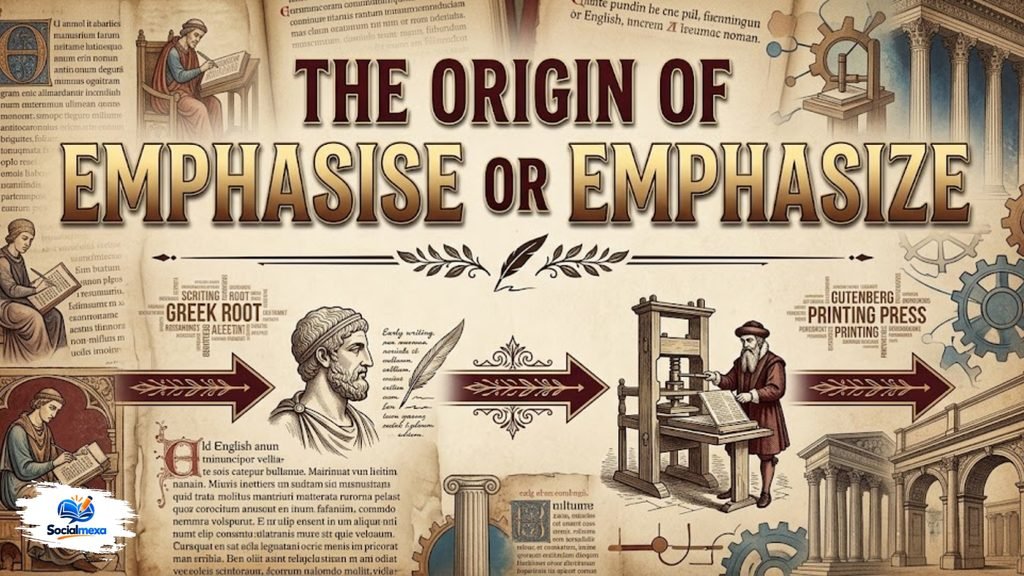
To see why two spellings exist, we need a short trip back in time.
The word starts with the Greek emphasis, which meant “appearance” or “indication.” It grew from the Greek verb emphainein, “to show” or “to make visible.” Latin borrowed it, French passed it along, and English picked it up in the 1500s as a noun.
The verb came later. English speakers took the noun emphasis and attached the verb ending ize to it, which gave us emphasize. That ending traces back to the Greek izein, and Oxford University Press still prefers it today.
So where did ise come from? French. French verbs of this type end in iser, and British writers gradually copied that look. Americans, led by Noah Webster in the early 1800s, wanted spelling to be simpler and more logical, so they stayed with ize.
Here is the detail most guides skip. The s in emphasise or emphasize belongs to the root word emphasis. Only the ending changes. That small fact will save you from a common mistake later in this article.
Emphasise or Emphasize Meaning
The word has one core job, and both spellings do it equally well. Let’s look at each one so the meaning sticks.
Emphasise
Emphasise means to show that something matters more than the things around it. You can do this with your voice, your writing, or your actions. A teacher who taps the whiteboard three times while saying “this will be on the exam” is emphasising the point.
British example: “The coach emphasised teamwork before the final.”
Emphasize
Emphasize carries exactly the same meaning. Only the spelling changes. When a speaker pauses, raises their voice, or underlines a sentence, they emphasize it.
American example: “The manager emphasized safety during the morning meeting.”
Both forms work the same way grammatically. You emphasize a thing directly, with no extra word between the verb and its object. We will come back to that, because many writers trip on it.
Emphasise or Emphasize Pronunciation

Good news for your ears: the spelling does not change the sound. Both words are pronounced EM fuh size.
The stress falls on the first syllable. Say it out loud: EM, fuh, size. The last part rhymes with “eyes” and “prize.”
Here is the pattern to remember:
- Em: stressed, like the letter M
- fuh: quick and soft, almost swallowed
- size: rhymes with “wise”
Accents shift the vowels a little, but the rhythm stays the same in the UK, the US, Australia, and Canada. If you can say “exercise” without trouble, you can say this word.
British English vs American English Spelling (Emphasise vs Emphasize)
The emphasise vs emphasize split is part of a bigger pattern. Many English verbs can end in either ise or ize, depending on the region.
| Region | Preferred spelling | Past tense |
| United States | emphasize | emphasized |
| Canada | emphasize | emphasized |
| United Kingdom | emphasise | emphasised |
| Australia | emphasise | emphasised |
| New Zealand | emphasise | emphasised |
The same split shows up in other words: organise and organize, recognise and recognize, realise and realize. If you know which side you are on for one of them, you can usually apply it to the rest.
One small twist deserves a mention. Some British publishers, including Oxford University Press, use ize as part of what is called “Oxford spelling.” So seeing ize in a UK book does not always mean a mistake. It may just be a house style.
Is Emphasises a Word?
Yes, emphasises is a real word. It is the third person singular form of the verb emphasise.
- She emphasises accuracy in every report.
- He emphasizes patience when training new staff. (American spelling)
Here is where people get confused. The noun emphasis has a plural, and it is emphases, not emphasises. So if you are talking about more than one point of focus, write “the emphases of the speech.” If you are describing an action, write “she emphasises.”
Quick test: if the word can be swapped with “stresses” as a verb, use emphasises or emphasizes. If it names a thing, use emphases.
Emphasise or Emphasize Synonyms
Using the same word five times in one page gets dull fast. These alternatives keep your writing fresh, and each one carries a slightly different flavor:
- Stress: simple and direct, great for everyday writing
- Highlight: works well when you are pointing at a specific fact
- Underline: adds a sense of making something impossible to miss
- Accentuate: a touch more formal, often used for features or qualities
- Underscore: common in business and reports
- Spotlight: gives a lively, almost theatrical feel
- Draw attention to: a plain phrase that fits any tone
Choose by tone. “Stress” suits a quick email. “Accentuate” suits a design review. “Spotlight” suits a headline.
Which Spelling Should You Use? Emphasize vs Emphasise/Emphasises or Emphasizes
Ask yourself one question: who is reading this?
- Writing for readers in the US or Canada? Use emphasize, emphasizes, emphasized, emphasizing.
- Writing for readers in the UK, Australia, or New Zealand? Use emphasise, emphasises, emphasised, emphasising.
- Writing for a global audience? Pick one and stay consistent. Most international websites default to American spelling, because it matches the largest group of English readers online.
- Submitting to a school, journal, or publisher? Follow their style guide. It beats any general rule.
Consistency matters more than which side you choose. A document that says “emphasize” in paragraph one and “emphasised” in paragraph six looks careless, even though both words are fine on their own.
Emphasise or Emphasize UK

If you live in Britain, the safe choice is emphasise. It appears in most major British newspapers, government pages, and school materials.
Here are some UK style examples:
- “The report emphasises the need for earlier screening.”
- “Teachers emphasised reading habits at home.”
- “She was emphasising the point when the bell rang.”
There is one exception worth knowing. Oxford University Press and some academic publishers prefer the ize ending even in British texts. So if you are writing for a university press, check the style sheet first. For everyday work such as emails, blogs, and business writing, emphasise is the expected form.
Common Mistakes with Emphasise or Emphasize
Even confident writers slip here. These are the errors that show up most often:
- Mixing spellings in one document. Writing “emphasise” early and “emphasized” later is the biggest giveaway. Choose a side and hold it.
- Writing “emphasize on.” The verb takes its object directly. We will fix this in a moment.
- Using the verb spelling for the noun. The noun is emphasis. Nobody writes “a strong emphasise.” Remember the root: the s stays, only the ending changes.
- Using “emphasises” as a plural noun. The plural of emphasis is emphases.
- Trusting a spell checker set to the wrong language. If your software is set to US English, it will flag emphasised as an error even when you are writing for a UK reader. Check your language setting before you trust the red squiggle.
- Assuming the ize spelling is always wrong in Britain. As covered above, it is not. It is a legitimate house style.
Emphasise or Emphasize in Everyday Examples
Grammar rules feel easier once you see them in daily life. Here is how the word appears in ordinary situations:
- At work: “Our team lead emphasized deadlines in today’s call.”
- At school: “The teacher emphasised neat handwriting on the test.”
- In a restaurant: “The menu emphasizes fresh, local ingredients.”
- In fitness: “This workout emphasises core strength.”
- In relationships: “She emphasized that honesty matters more than perfection.”
Notice how natural the word feels in each one. People usually reach for it when they want someone to remember a specific point. That is why it shows up so often in meetings, lessons, and advice.
Emphasise or Emphasize Examples
For a clear side by side look, here are matching sentences in both spellings. Read them aloud and notice that only one letter changes.
American English (emphasize)
- The speaker emphasized the importance of sleep.
- This course emphasizes practical skills over theory.
- We have emphasized cost savings in the new plan.
- The author is emphasizing character, not plot.
British English (emphasise)
- The speaker emphasised the importance of sleep.
- This course emphasises practical skills over theory.
- We have emphasised cost savings in the new plan.
- The author is emphasising character, not plot.
That one letter, z versus s, is the entire difference. Everything else stays the same.
Emphasise or Emphasize: Google Trends & Usage Data

Search behavior tells an interesting story. Both spellings get searched constantly, and emphasize draws more total interest worldwide, mainly because the United States has so many English speakers. In the UK, Australia, and New Zealand, emphasise leads in local search and in published writing.
Language corpora, which are huge collections of printed text, show the same pattern. American texts lean strongly toward ize, while British texts lean toward ise, with a noticeable minority of ize usage in academic publishing.
For the most current numbers, open Google Trends and compare the two terms by country. The regional split is usually clear within seconds. It also helps you decide which version suits your readers, since the data shows exactly where each one dominates.
Emphasise or Emphasize On
This one trips up many learners, so let’s clear it up. The correct form is emphasize with no “on” after it.
- Wrong: “The teacher emphasized on punctuality.”
- Right: “The teacher emphasized punctuality.”
Emphasize is a transitive verb. That means it passes its action straight to a thing, with no helper word in between.
Here is where “on” does belong. It works with the noun emphasis:
- “The school places great emphasis on punctuality.”
- “There is a strong emphasis on safety here.”
A simple memory trick: the verb walks alone, the noun brings a friend. Emphasize needs no preposition. Emphasis pairs with “on.”
Comparison Table: Emphasise or Emphasize
Here is everything in one quick view you can bookmark.
| Feature | Emphasize | Emphasise |
| Main region | US, Canada | UK, Australia, New Zealand |
| Third person | emphasizes | emphasises |
| Past tense | emphasized | emphasised |
| Ongoing form | emphasizing | emphasising |
| Noun form | emphasis | emphasis |
| Plural noun | emphases | emphases |
| Pronunciation | EM fuh size | EM fuh size |
| Meaning | Give special importance | Give special importance |
| Correct? | Yes | Yes |
The noun rows are identical because the noun never changes. Only the verb has two faces.
Emphasise Pronunciation

Earlier we covered the sound. Now let’s make it useful in real speech, because saying a word and stressing it correctly in a sentence are different skills.
The word you are emphasising often becomes the loudest part of the sentence, which is a neat bit of irony. Compare these two:
- “I said I would call.” (Not “I wrote it.”)
- “I said I would call.” (Not someone else.)
Moving the stress changes the meaning, and that is exactly what the word describes. If you speak English as a second language, this is a useful habit. Pick the one word that carries your message and give it extra volume or length.
A few more practical tips:
- Keep the first syllable strong, so it never sounds like “im.”
- Do not stress the last syllable. “Em-fuh-SIZE” sounds off to native ears.
- Practice with the related forms emphatic (em FAT ik) and emphatically, which shift the stress to the second syllable.
FAQs About Emphasise or Emphasize
What does “emphasise” mean?
Emphasise means to give extra weight, attention, or importance to something so people notice it. It is the British spelling, and it means exactly the same as emphasize. Example: “The guide emphasised the need for warm clothing.”
What does “emphasis” mean?
Emphasis is the noun. It means special importance or attention given to something, or extra force placed on a word when speaking. Example: “The company puts emphasis on customer service.”
When to use emphasize?
Use emphasize when writing for American or Canadian readers, or for a global audience that expects US spelling. It is also the safest default for international websites and apps.
How do you use emphasize in a sentence?
Place it right before the thing you want to highlight, with no extra word between them. Example: “Good writers emphasize clarity over clever wording.” Add “-ing” or “-ed” as needed: emphasizing, emphasized.
Conclusion
The emphasise or emphasize question comes down to one thing: your audience. Write emphasize for American and Canadian readers, and emphasise for British, Australian, and New Zealand readers. Stay consistent, drop the “on” after the verb, and remember that the noun is always emphasis.
Now that the spelling no longer worries you, you can spend that energy on the thing you actually want to emphasise: your message.

Emily Carter is an English language writer who creates simple guides on grammar, word meanings, spelling, slang, and everyday English. Her goal is to make confusing language topics clear, practical, and easy to understand.
3 thoughts on “Emphasise or Emphasize? Discover the Correct Spelling”