


You heard someone say “feen” in a song, then saw “fiend” written in a book, and now you are stuck wondering which one is actually real. It is a fair thing to trip over. Fiend is the correct, dictionary recognized spelling. Feen is a slang, phonetic version of that same word, used mostly in casual speech, music, and social media. Once you know that one split, the rest of the confusion clears up fast.
Fiend or Feen – Quick Answer
Fiend is the standard English word. It means a wicked or evil being, or someone with an intense craving for something, like a “sugar fiend.” Feen is not in formal dictionaries. It is an informal spelling that grew out of how people pronounce fiend in fast, casual speech, especially in hip hop and urban slang. Use fiend when you write. Use feen only if you are texting a friend or writing dialogue that needs a certain voice.
Dont Miss :Cosy or Cozy? Discover the Correct Spelling
What Does Fiend Mean?

At its core, a fiend is someone (or something) driven by an intense, almost uncontrollable urge. That urge can be dark, like an evil spirit in old folklore, or it can be totally harmless, like your coworker who cannot skip their afternoon coffee.
Modern dictionaries list two main senses:
- A wicked, cruel, or demonic being
- A person who is extremely enthusiastic about or addicted to something
So “movie fiend” and “demon fiend” both work, even though one sounds fun and the other sounds terrifying. Context decides which meaning you are dealing with.
What Does Feen Mean?
Feen carries the same basic idea as fiend, just dressed in casual clothes. People use it to describe someone who strongly wants or craves something right now, not a general hobby, but an urgent pull toward it.
You will most often see it as a verb: “I’m feening for pizza” means “I really, really want pizza.” That verb form, feening, is actually more common online than the noun feen itself.
A Feen for Drugs
This is where the word gets serious. In street slang, “feen” (and the older spelling “fiend”) has long been used to describe someone struggling with substance addiction, as in “drug feen” or “dope feen.”
This usage traces back decades, since terms like “dope fiend” were already common in American slang by the mid 1900s. Over time, especially in AAVE and hip hop culture from the late 20th century, the pronunciation shifted and “feen” became the way people wrote it out.
If you are discussing addiction in writing, especially anything formal, medical, or public facing, stick with fiend or, better yet, use respectful clinical terms like “person struggling with substance use.” Slang spellings can come across as dismissive in serious contexts.
Fiend or Feen Meaning
Strip away the slang layer and the meaning overlaps almost completely. Both words point to obsession, craving, or an intense pull toward something. The real difference is not meaning, it is register: fiend is formal and standard, feen is informal and spoken.
Think of it like “gonna” versus “going to.” Same idea, different level of formality.
The Origin of Fiend or Feen
Fiend
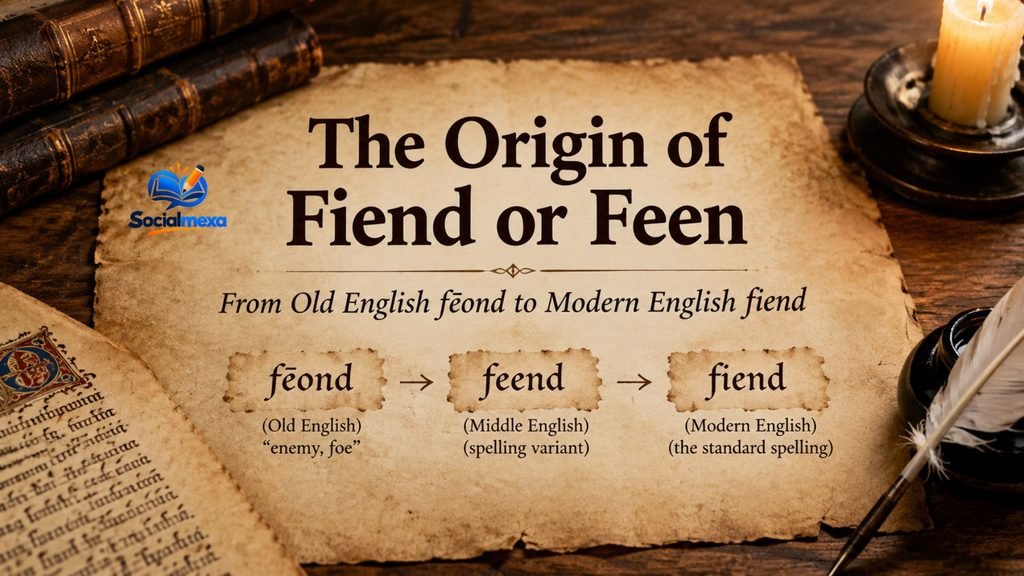
Fiend has genuinely old roots. It comes from the Old English word “feond,” meaning enemy or hater, which itself traces back to a Germanic verb meaning “to hate.” For centuries, English speakers used fiend to describe devils, demons, and enemies of God in religious and folklore writing.
By the 1800s, the word had softened in everyday speech. People started calling an overly enthusiastic person a “fiend,” the same way we now say someone is “obsessed” with a hobby, minus any actual demons involved.
Feen
Feen has a much shorter history. It is not an ancient word, it is a spelling that developed from how fiend sounds when spoken quickly. Interestingly, “feen” also has a completely separate Irish origin, from the Shelta word “fíon” or “feen,” meaning “man,” which has nothing to do with cravings at all. That is a fun coincidence, but it is a different word wearing the same letters.
The slang meaning of feen, the one tied to craving or addiction, really took off through American urban vernacular and hip hop lyrics in the late 1900s, and it has stayed active in music and internet culture ever since.
British English vs American English Spelling
Here is some good news: this is not a colour versus color situation. Fiend is spelled the exact same way in British and American English. There is no regional variant that changes the letters.
The only spelling shifts you will encounter, feen, fein, or feind, come from slang and phonetics, not from a British American divide. So if you are ever unsure, you do not need to check which country you are writing for. Fiend works everywhere.
Fiend Addict
“Fiend addict” is a phrase people sometimes search for, but it is a bit redundant since fiend already implies an intense craving close to addiction. In casual writing you will see combinations like “drug fiend,” “nicotine fiend,” or “shopping fiend,” all of which describe someone whose desire has crossed into compulsive territory.
If you want precise, non slang language for someone dealing with substance dependency, professional and medical writing favors terms like “person with a substance use disorder” over “fiend” or “feen,” both of which can sound judgmental outside casual conversation.
Which Spelling Should You Use?
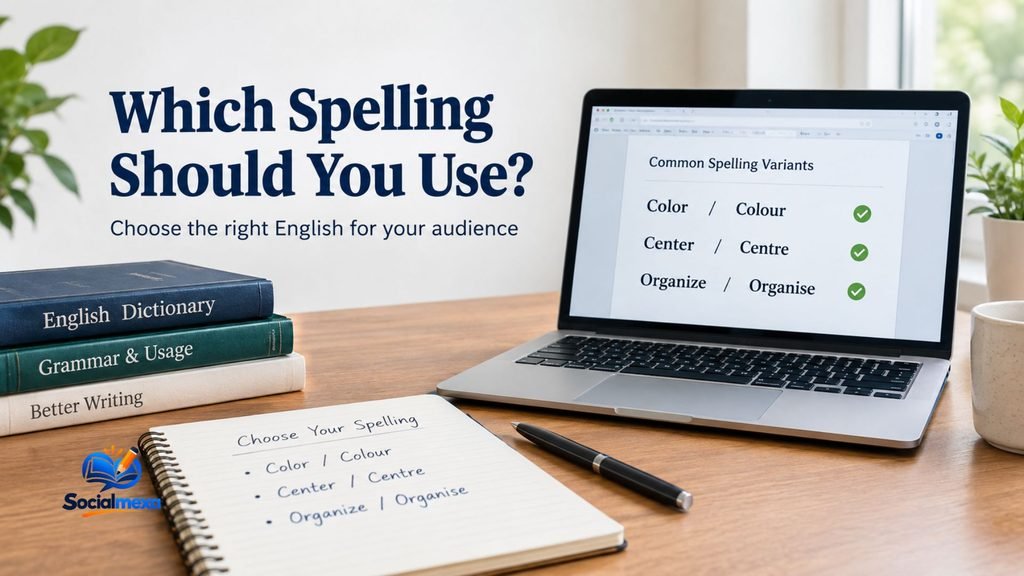
This really comes down to where your words are going to live.
- Choose fiend for essays, articles, emails, resumes, books, or anything that needs to look polished.
- Choose feen only in casual texting, song lyrics, dialogue meant to sound authentic, or social captions where a looser tone fits.
If you are ever in doubt, fiend is the safe, always correct choice.
Common Mistakes with Fiend or Feen
People trip over this word family more than you would expect. The most frequent mix ups are:
- Writing feind, which flips the letters and is simply a typo
- Writing fein, confusing it with the Irish word Fein (as in Sinn Féin), which means something entirely different
- Using feen in formal writing, where it reads as a spelling error rather than intentional slang
- Assuming fiend only means something evil, when it just as often means an enthusiast
A quick memory trick: fiend follows the “i before e” pattern, like “friend” but scarier.
Fiending or Feening
Both spellings can turn into a verb, and both describe the act of craving something intensely. “Fiending” is closer to the standard spelling, while “feening” is the slang version you will see far more often online.
Example: “I’ve been feening for a vacation all month” hits the same note as “I’ve been fiending for a vacation all month.” Feening simply sounds more natural in casual speech, which is exactly why it dominates social media captions and song lyrics.
Fiend or Feen in Everyday Examples

Seeing the words in context makes the choice much easier, so here is how each one shows up across different types of writing.
Formal communication always calls for the standard spelling. “I’m a bit of a productivity fiend, so I already finished the report early.”
News Writing
Journalism sticks to dictionary spelling for credibility. “Local officials describe the suspect as a longtime drug fiend with multiple prior offenses.”
Social Media
This is feen’s natural habitat. “Not me feening for iced coffee at 7am again.”
Formal Writing
Academic papers, business documents, and professional bios should avoid slang entirely. “Her attention to detail makes her a true perfectionist, some might even call her a detail fiend.”
Fiend or Feen – Google Trends & Usage Data
Search interest tells a clear story here. “Fiend” consistently draws far more global search volume than “feen,” largely because it appears in dictionaries, books, movie titles, and video game names like Fiend from various RPGs.
“Feen,” on the other hand, spikes in short bursts, usually tied to viral TikTok sounds, new song releases, or slang explainer trends. This pattern matches what you would expect: fiend has steady, reference based demand, while feen rides cultural waves and then cools off until the next viral moment brings it back.
Fiend Pronunciation of Fiend or Feen
Both words are pronounced the same way: “feend,” rhyming with “trend” but with a long E sound, similar to “friend” if you stretched the vowel. That shared pronunciation is exactly why the spelling confusion exists in the first place. Say the word out loud and it sounds like feen, but the standard written form keeps the older “ie” spelling.
Comparison Table: Fiend or Feen
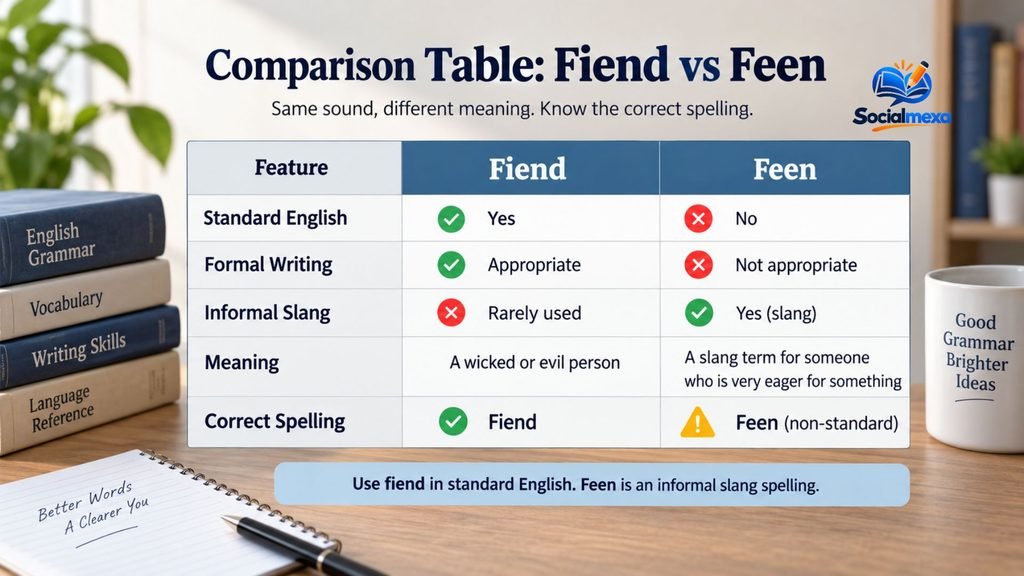
| Feature | Fiend | Feen |
| Standard spelling | Yes | No |
| Dictionary recognized | Yes | Rarely, mostly slang dictionaries |
| Origin | Old English “feond” | Phonetic slang version of fiend |
| Best used in | Formal or neutral writing | Casual speech, texting, lyrics |
| Pronunciation | “feend” | “feend” |
| Common phrases | drug fiend, movie fiend | feening for, candy feen |
Frequently Asked Questions
What is a feen in slang?
In slang, a feen is someone who strongly craves or wants something, often used in phrases like “I’m feening for” a specific food, drink, or experience. It can also describe someone dealing with drug addiction, depending on context.
What does “fiend” mean in slang?
In casual slang, fiend usually means someone who is intensely enthusiastic about or addicted to something, such as a “chocolate fiend” or “workout fiend,” separate from its older, darker meaning of an evil spirit.
Is it fein, fiend or feen?
The correct standard English word is fiend. Feen is an informal slang spelling of that same word. Fein and feind are both mistakes, fein confuses it with the unrelated Irish word Fein, and feind simply reverses the letters.
What does feind mean?
Feind is not an English word at all, it is a common misspelling of fiend caused by flipping the “ie” to “ei.” If you see feind in writing, it almost always should read as fiend.
Conclusion
So, fiend or feen? When you are writing anything meant to be read widely, correct, or professional, fiend is your answer every time. Save feen for texts, captions, or dialogue where a looser, spoken tone actually helps your writing feel real. Same root word, same sound, just two very different outfits for two very different occasions.

Emily Carter is an English language writer who creates simple guides on grammar, word meanings, spelling, slang, and everyday English. Her goal is to make confusing language topics clear, practical, and easy to understand.
7 thoughts on “Fiend or Feen? Discover the Correct Spelling Today”