


Ever split a pizza with a friend and then second guessed how to write it down? You are not alone. “Halves” is the correct plural of “half.” “Halfs” is a common mistake, but it is not standard English in any dictionary, style guide, or grammar book. If you have been typing “halfs” in emails or captions, this article will fix that in the next few minutes and explain exactly why halves wins every time.
Halves or Halfs – Quick Answer
The correct plural of “half” is “halves.” There is no situation in standard English where “halfs” is correct, whether you are talking about two halves of a sandwich, two halves of a soccer match, or two better halves at a wedding toast.
This follows a specific spelling pattern in English where certain words ending in f switch to ves in the plural form. Half is one of them.
Halves Synonyms
If you want to mix up your writing a bit, here are a few words and phrases that work in place of “halves” depending on context:
- Portions
- Segments
- Fractions
- Parts
- Divisions
None of these are exact one to one swaps in every sentence, but they help when “halves” starts to feel repetitive in a paragraph.
What Does “Halves” Mean?
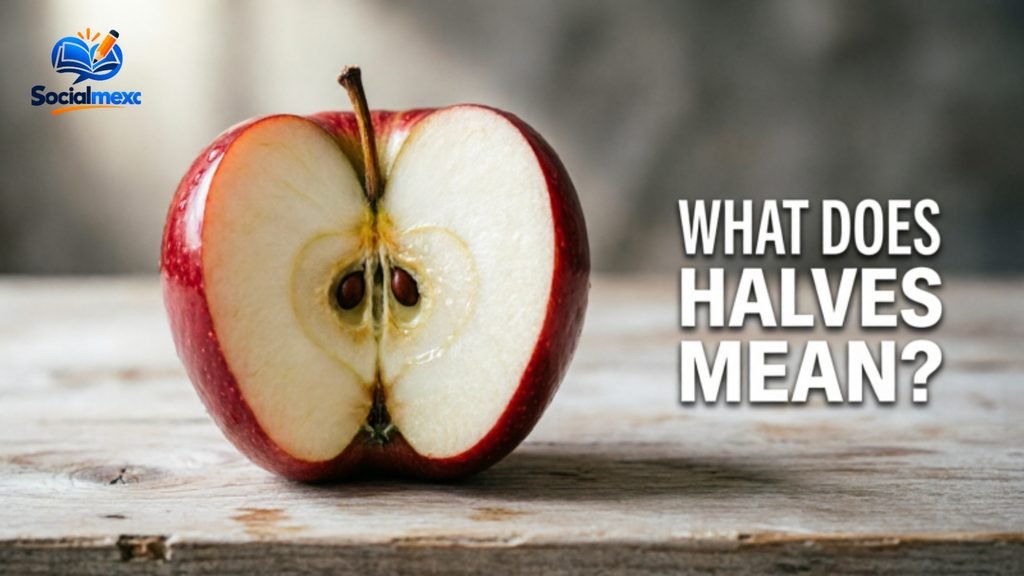
“Halves” is simply the plural form of “half,” which refers to one of two equal parts of something. If you cut a cake into two equal pieces, you now have two halves.
It also shows up as a verb. “She halves the recipe” means she divides it into two equal parts. Same spelling pattern, different job in the sentence.
Halves Pronunciation
Here is where a lot of learners trip up. “Halves” is pronounced hav-z, not “half-s.” The f sound softens into a v sound, which is exactly why the spelling changes too. Say it out loud a few times and it will click.
Two Halves or Halfs
This is the exact phrase most people search for, and the answer is short: it is always “two halves.” Think of a soccer match. Commentators talk about the first and second half of the game, and together those are the two halves, never the two halfs.
The same goes for anything split evenly. Two halves of an orange. Two halves of a bet. Two halves of your paycheck going to rent (we have all been there).
What About “Halfs”?
“Halfs” is not a real word in modern standard English. You will not find it listed as correct in Merriam-Webster, Oxford, or Cambridge dictionaries.
So where does it come from? Most people write “halfs” because English usually forms plurals by just adding an s, like cats or books. It feels natural to apply that same rule to half. Unfortunately, half belongs to a smaller group of words that plays by different rules.
| Related Articles You’ll Love |
| Studder or Stutter? Get the Correct Spelling Now |
| Authorized or Authorised? Discover the Correct Spelling |
| Skied or Skiied? The Correct Spelling Explained |
Halves or Halfs Meaning
Since “halfs” is not a standard word, it does not carry an accepted dictionary meaning of its own. People who write it almost always intend the same meaning as “halves,” they have just used the wrong spelling.
So if you are asking what “halfs” means, the honest answer is that it means the same thing writers intend when they mean halves, just spelled incorrectly.
The Origin of Halves
English inherited this f to v pattern from Old English and Germanic roots. Words like half, wife, knife, leaf, and wolf all trace back to a time when the plural naturally softened that final f sound.
Over centuries, spelling settled to match that softer sound, which is how we ended up with halves, wives, knives, leaves, and wolves. Half followed the same road, and halves is what survived.
Halves or Halfs Examples
Seeing it in real sentences makes the rule stick faster than any explanation.
- Correct: She split the orange into two halves.
- Incorrect: She split the orange into two halfs.
- Correct: Both halves of the team practiced separately.
- Incorrect: Both halfs of the team practiced separately.
- Correct: We are halves of the same partnership.
- Incorrect: We are halfs of the same partnership.
Notice a pattern? Halves fits naturally every single time. Halfs never does.
Halves or Halfs Grammar
Grammatically speaking, half is an irregular noun. Most English nouns pluralize by adding s or es, but a specific subset ending in f or fe switches that ending to ves instead.
This is not optional or stylistic. It is a fixed rule of English morphology, meaning the structure of how words change form. Half simply belongs to the irregular group, not the regular one.
The Grammar Rule: F → VES Plurals
Here is the rule broken down simply. When a singular noun ends in f or fe, the plural often changes that ending to ves.
Examples besides half include:
- Knife becomes knives
- Wife becomes wives
- Leaf becomes leaves
- Loaf becomes loaves
- Shelf becomes shelves
Not every f ending word follows this rule though. Roof becomes roofs, not rooves, and chief becomes chiefs, not chieves. English loves its exceptions, so half sticking to the ves pattern is worth remembering as a specific case rather than assuming it applies everywhere.
British English vs. American English Spelling
Good news here. Unlike many British versus American spelling differences (think colour versus color), “halves” is spelled the exact same way in both regions.
Whether you are writing for a UK audience or a US audience, halves stays halves. No adjustments needed, which makes this one grammar rule you never have to double check based on your audience’s country.
Comparison Table: Half vs. Halves vs. Halve
| Word | Part of Speech | Meaning | Example |
|---|---|---|---|
| Half | Singular noun | One of two equal parts | I ate half the pizza |
| Halves | Plural noun | More than one equal part | We split it into halves |
| Halve | Verb | To divide something into two equal parts | Please halve the recipe |
Keeping these three straight solves most of the confusion people run into.
Which Spelling Should You Use?
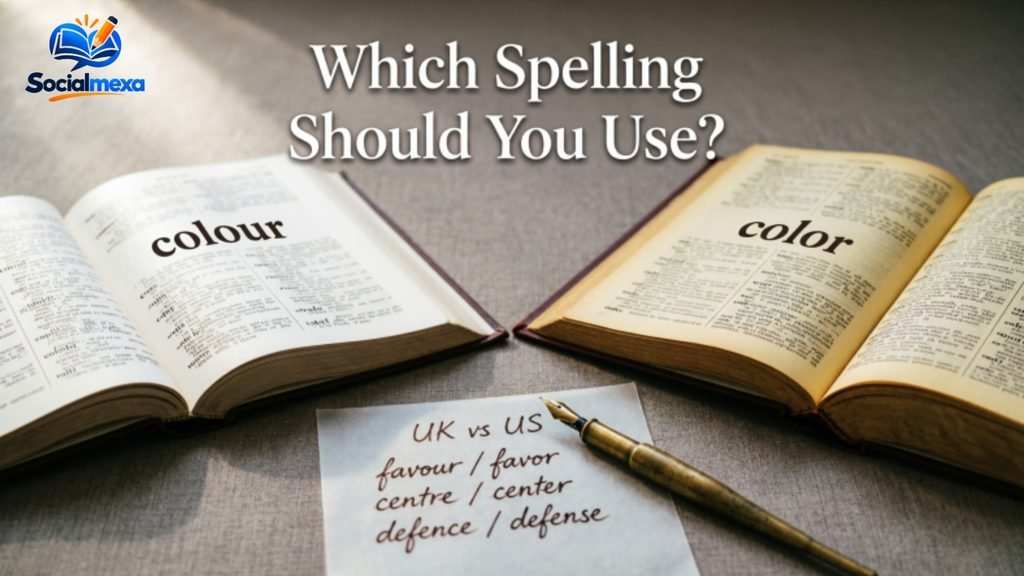
Always use halves when you are talking about more than one equal part of something. There is no context, whether formal writing, casual texting, or professional content, where “halfs” is the accepted spelling.
If you are ever unsure mid sentence, try substituting “parts.” If “parts” fits, “halves” almost certainly fits too.
Halves Meaning
To bring it back to basics one more time: halves means two or more equal portions of a single whole. It is the plural of half, used any time you are referring to multiple equal pieces rather than just one.
Better Halves or Halfs
You have likely heard someone jokingly call their spouse their “better half.” When more than one couple is involved, the phrase becomes “better halves,” not “better halfs.”
Example: “All the better halves showed up to the reunion, and honestly, they had more fun than we did.”
Common Mistakes with halves or halfs
Here are the slip ups people make most often, and quick fixes for each.
- Mistake: Writing “halfs” instead of “halves.” Fix: Remember the f to v shift.
- Mistake: Using “halve” when you mean “half.” Fix: Halve is a verb, half is the noun.
- Mistake: Saying “halfes.” Fix: This is not a word at all, drop the e before s.
- Mistake: Mixing singular and plural in one sentence, like “he ate two half.” Fix: Use halves whenever you mean more than one part.
Halves in Everyday Examples
Halves shows up more often than people realize once you start noticing it.
- Sports: “Both halves of the match were intense.”
- Cooking: “Cut the avocado into halves before removing the pit.”
- Finance: “We split the profits into equal halves.”
- Relationships: “They complete each other like two halves of a whole.”
Halves – Google Trends & Usage Data

Search interest consistently favors “halves” over “halfs,” and dictionaries and style guides list only “halves” as correct. Search engines and grammar checking tools flag “halfs” as a spelling error, which reflects how firmly established halves is as the accepted plural across both everyday and formal writing.
Keyword Comparison Table
| Search Term | Correct Spelling? | Notes |
|---|---|---|
| Halves | Yes | Standard, dictionary accepted plural |
| Halfs | No | Common misspelling, not in dictionaries |
| Two halves | Yes | Correct usage in all contexts |
| Two halfs | No | Incorrect, should always be halves |
| Better halves | Yes | Correct plural form of the idiom |
Frequently Asked Questions about halves or halfs
Which is correct, a half or an half?
“A half” is correct. “Half” starts with a consonant sound (h), so it takes “a” rather than “an.”
Shall we go halves or halfs?
“Shall we go halves” is correct. This British idiom, meaning to split a cost evenly, always uses halves, never halfs.
Is it “two halfs” or “two halves”?
It is always “two halves.” This is one of the most searched versions of this question, and halves is the only accepted spelling.
Is it better, halves or halfs?
Halves is the only grammatically correct option. Halfs is a misspelling and should be avoided in any writing, formal or casual.
Conclusion
At the end of the day, the rule is simple: half becomes halves, never halfs. It follows the same f to v pattern as knife to knives and leaf to leaves, and it stays the same in both British and American English.
Next time you are splitting a bill, a pizza, or even bragging about your team winning both halves of the game, you will know exactly which spelling to reach for.

Emily Carter is an English language writer who creates simple guides on grammar, word meanings, spelling, slang, and everyday English. Her goal is to make confusing language topics clear, practical, and easy to understand.
2 thoughts on “Halves or Halfs? Discover the Correct Plural Form”