


Have you ever stopped in the middle of a sentence and wondered whether to write 23th or 23rd? You are not alone. Ordinal numbers confuse many writers, especially when the ending does not match what the surrounding numbers suggest. A birthday card, a calendar invite, or a race result can all raise the question.
This guide gives the quick answer first: 23rd is correct, and 23th is not. Then it explains the rule behind the spelling, shows how to use it in dates, rankings, and everyday writing, and points out the mistakes people make most often. You will also find a short quiz, memory tricks, and answers to common questions, so you can write the number with confidence.
23th
“23th” is a spelling mistake. It follows the pattern of numbers like 4th, 5th, and 24th, where “th” is the usual ending. Many people type it out of habit, but it does not match how the number is spoken or spelled out.
You will see it in casual messages, social posts, and rushed notes. It is never correct in standard English, so it is worth fixing in any formal or public writing.
23rd
“23rd” is the correct ordinal form of 23. It is the short way to write “twenty-third.” The ending “rd” matches the last two letters of “third.”
You can use it for dates, positions in a list, anniversaries, and rankings. Anywhere you would say “twenty-third” out loud, you can write 23rd.
23th or 23rd Meaning
An ordinal number shows position or order, such as first, second, or third. A regular number, like 23, shows quantity. So “23 students” tells you how many, while “the 23rd student” tells you where that student falls in a line or list.
The word behind 23rd is “twenty-third.” The numeral and the suffix together stand in for that spoken form. This is why the suffix must match the final word, “third,” and not a generic “th.”
| Related Articles You’ll Love |
| Verbage or Verbiage? Get the Spelling Right? Get the Spelling Right |
| Cosy or Cozy? Discover the Correct Spelling |
| Bellies or Bellys? Discover the Correct Spelling Fast |
23th or 23rd Crossword and Word Puzzles

In crosswords and word games, clues often ask for the spelled-out form. The answer to “23rd in line” is usually written as TWENTYTHIRD, with the hyphen dropped to fit the grid. The word “third” is what matters, and it ends the same way in every version.
If you ever see “23th” as a possible answer in a puzzle, treat it as a typo. Puzzle editors follow standard spelling, so only twenty-third and 23rd are valid.
23rd or 23th: Quick Answer
The correct form is 23rd. The rule is simple: look at the last digit of the number. If it is 3, the ending is “rd,” unless the number ends in 13.
Meaning:
23rd means the number 23 in a series. It is the position that comes after 22nd and before 24th.
Examples:
- She finished in 23rd place.
- Our 23rd anniversary is in June.
- The meeting is on the 23rd of the month.
The Origin of 23rd
English ordinals grew out of the spoken words people use for position. First, second, and third are old, irregular forms. Most other ordinals add “th” to the cardinal number, as in fourth and fifth.
When people began writing numerals with short endings, they took the last two letters from the spoken word. That is how “third” gave us “3rd,” and “twenty-third” gave us “23rd.”
Key Idea:
The suffix comes from the last word in the spoken number. Since “twenty-third” ends in “third,” the written form ends in “rd.”
23th or 23rd Answer
The answer is 23rd, every time. There is no context in standard English where 23th is acceptable.
If you want to avoid the numeral, you can spell it out as “twenty-third.” Both forms are correct, and the choice depends on style and space.
British English vs American English Spelling
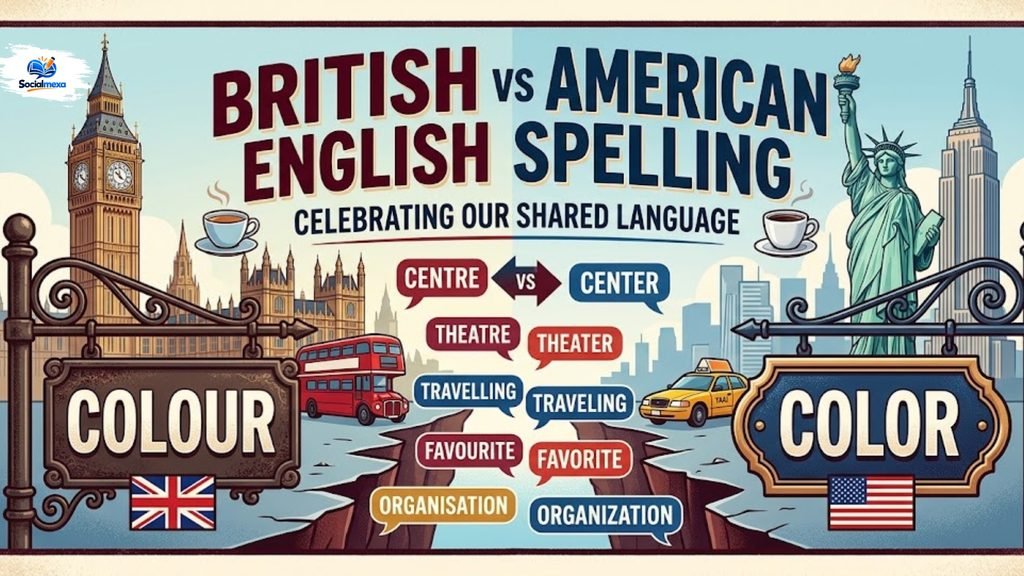
The ordinal suffix is the same in both varieties. What changes is the date format around it. American writers often say “October 23rd,” while British writers often say “23rd October” or “23 October.”
Both varieties also use the same ordinal numbers for rankings and anniversaries. So 23rd in American English and 23rd in British English are identical.
Comparison Table
| Feature | American English | British English |
| Ordinal for 23 | 23rd | 23rd |
| Typical date order | October 23rd | 23rd October |
| Date without suffix | October 23 | 23 October |
| Spelled out | twenty-third | twenty-third |
23th or 23rd Quiz
Try these quick checks. Pick the correct form in each sentence.
- It was my (23th / 23rd) birthday.
- Our team came in (23th / 23rd) place.
- Her (23th / 23rd) anniversary is next week.
- The party is on the (23th / 23rd).
The answer is 23rd in all four. If you picked it every time, you already know the rule.
Which Spelling Should You Use?
Use 23rd. It is the only correct numeral form, and it works in formal and casual writing alike.
Simple Answer:
Write 23rd, or spell it out as twenty-third.
Use “23rd” when:
- Giving a date, such as “the 23rd of May”
- Describing a rank, such as “23rd in the league”
- Marking a milestone, such as a 23rd birthday
- Numbering a floor, chapter, or edition
Never use:
- 23th
- 23nd
- 23d (except in some older or legal styles)
Common Mistakes with 23rd
Most errors come from guessing the ending instead of applying the rule. A few patterns show up again and again.
Mistake 1:
Writing “23th” because most ordinals end in “th.” The final digit 3 points to “rd,” not “th.”
Mistake 2:
Writing “23nd” because 22nd ends in “nd.” Each number in the 20s has its own ending, based on its last digit.
Mistake 3:
Mixing the suffix with the wrong word, such as “twenty-three” for the ordinal. The ordinal word is “twenty-third,” with “third” at the end.
Mistake 4:
Dropping the hyphen or the suffix inconsistently, such as “twenty third” in one place and “23rd” in another. Pick a style and keep it the same across your document.
23rd Synonym and Related Forms
There is no true synonym for 23rd, but there are other ways to write the same idea. The most common is the spelled-out form, “twenty-third.” Some style guides prefer it for formal text, especially at the start of a sentence.
You may also see “23d” in older documents and some legal writing. It is a recognized shortened form in those settings, but “23rd” is the standard choice for everyday use. A superscript version, like 23<sup>rd</sup>, is also fine when your formatting allows it.
23rd in Everyday Examples
Seeing the number in real situations makes the rule easier to remember. Here are simple examples from common settings.
Daily Life:
- My appointment is on the 23rd.
- We celebrate their 23rd wedding anniversary this year.
School:
- She was the 23rd student to finish the exam.
- Please turn to page 23 for the 23rd question.
Work:
- The invoice is due on the 23rd of the month.
- Our office is on the 23rd floor.
Social Media:
- Happy 23rd birthday, Sam!
- Join us on October 23rd for the live event.
23th or 23rd Grammar
The grammar rule is based on the last digit. Numbers ending in 1 take “st,” numbers ending in 2 take “nd,” numbers ending in 3 take “rd,” and almost everything else takes “th.”
The only exceptions are 11, 12, and 13, which take “th” because the spoken forms are eleventh, twelfth, and thirteenth. This is why 13th is correct but 23rd, 33rd, and 43rd all end in “rd.” The same logic gives you 21st, 22nd, 23rd, and 24th in a row.
23rd Usage and Trends
People search for this question often because the wrong form looks natural when typed quickly. Autocorrect does not always catch it, and many people never learned the rule in a clear way.
Key Insight:
The confusion is about habit, not difficulty. Once you remember that the last digit decides the ending, the problem mostly goes away.
Comparison Table: 23rd vs 23th
| Form | Correct? | Reason |
| 23rd | Yes | Matches “twenty-third” |
| 23th | No | Does not match the spoken word |
| 23nd | No | “nd” belongs to numbers ending in 2 |
| 23d | Limited | Older or legal style only |
| twenty-third | Yes | Fully spelled-out form |
23rd vs 13th (Important Difference)

Many writers wonder why 13th ends in “th” while 23rd ends in “rd.” The reason is that 11, 12, and 13 are special cases. Their ordinals are formed differently, so the last-digit rule does not apply to them.
The same logic explains the question of 3rd or 3th. The correct form is 3rd, because it matches “third.” Compare it with 13th, which is a different case. Remember that 13th and 23rd follow different patterns, even though both numbers end in 3.
23th or 23rd Examples
Here are more sentences that show the correct form in context:
- The 23rd of March was a Friday.
- He came in 23rd in a field of 200 runners.
- This is the 23rd edition of the book.
- Our 23rd anniversary falls on a Sunday.
- The company opened its 23rd store this spring.
Notice that each sentence uses “23rd” naturally. None of them could be written with “23th.”
Memory Tricks to Remember “23rd”
A few simple habits can help the correct form stick.
Trick 1:
Say the number out loud as “twenty-third.” The word “third” ends in “rd,” and so does the numeral.
Trick 2:
Remember the pattern 21st, 22nd, 23rd. The endings follow the same order as first, second, third.
Trick 3:
Check the last digit only. A 1 gets “st,” a 2 gets “nd,” and a 3 gets “rd,” except for 11, 12, and 13.
23rd Meaning
23rd is the ordinal form of the number 23. It describes a position in a sequence, such as a date, a rank, or an anniversary. It is read aloud as “twenty-third.”
Because it is based on the word “third,” the suffix is always “rd.” This holds in both American and British English, and in formal and informal writing.
FAQs
Is it 23th or 23rd?
The correct form is 23rd. It matches the spoken word “twenty-third,” so “23th” is a spelling mistake.
How do you write the 23rd of the month?
Write “the 23rd” or “October 23rd” in American English, and “23rd October” in British English. Both are correct.
Is it 23rd birthday or 23th birthday?
It is 23rd birthday. The same rule applies to anniversaries, such as a 23rd anniversary.
Why is 13th different from 23rd?
Numbers ending in 11, 12, and 13 are exceptions and use “th.” Other numbers ending in 3, like 23, use “rd.”
Can I spell out twenty-third instead?
Yes. Write “twenty-third” with a hyphen. It is correct and often preferred in formal writing.
Conclusion
The short answer to 23th or 23rd is that 23rd is the only correct choice. The ending comes from the word “third,” so the suffix is “rd.” Remember that the last digit decides the ending, with 11, 12, and 13 as the exceptions. That is why you write 21st, 22nd, 23rd, and 24th, but 11th, 12th, and 13th.
Use 23rd for dates, rankings, birthdays, and anniversaries, or spell it out as twenty-third when you want a more formal tone. Avoid 23th and 23nd in all cases. If you stay consistent and check the last digit, you can write any ordinal number correctly without second-guessing it.

Emily Carter is an English language writer who creates simple guides on grammar, word meanings, spelling, slang, and everyday English. Her goal is to make confusing language topics clear, practical, and easy to understand.
3 thoughts on “23th or 23rd? Discover the Correct Spelling Fast”