


Ever typed “emphasize” and had your spell checker throw a fit, then switched to “emphasise” and had it complain again? You’re not going crazy. Both words are correct, just not in the same country.
Emphasize is the American spelling, and emphasise is the British spelling. Same meaning, same pronunciation, just a different letter fighting for attention. Once you know which audience you’re writing for, the confusion disappears.
Emphasize or Emphasise – Quick Answer
Here’s the short version before we go deeper.
Emphasize (with a z) is used in American English. Emphasise (with an s) is used in British English, and also in Australian, Canadian, and Indian English in most formal writing.
Both words mean the same thing: to give special importance to something. The spelling depends on your audience, not on grammar rules.The Origin of Emphasize or Emphasise
The word traces back to the Greek term “emphasis,” meaning a showing or a display of something clearly. Latin picked it up, and eventually English absorbed it too.
The interesting part is the “ize” versus “ise” battle. This spelling split did not start with this one word. It runs across dozens of English verbs like “organize,” “realize,” and “recognize.” American English leaned toward the Greek-based “ize” ending early on, while British publishers gradually shifted toward the French-influenced “ise” ending during the 1800s.
So this is not a modern internet disagreement. It is centuries old.
Emphasize verb
“Emphasize” (or “emphasise”) is a verb, and it works exactly the way you’d expect an action word to work. It describes the act of stressing or highlighting a point.
You can emphasize a word while speaking by raising your tone. You can emphasize a sentence in writing by bolding it or repeating the idea. You can even emphasize a feeling, like when someone says, “I want to emphasize how proud I am of you.”
It is flexible, and it shows up constantly in speeches, essays, emails, and everyday conversation.
| Keep Reading These Articles |
| Useing or Using? Learn the Correct Spelling Fast |
| Monkeys or Monkies? The Correct Spelling You Need to Know |
| Likeable or Likable: Which Spelling Is Correct? |
British English vs American English Spelling (Emphasize or Emphasise)
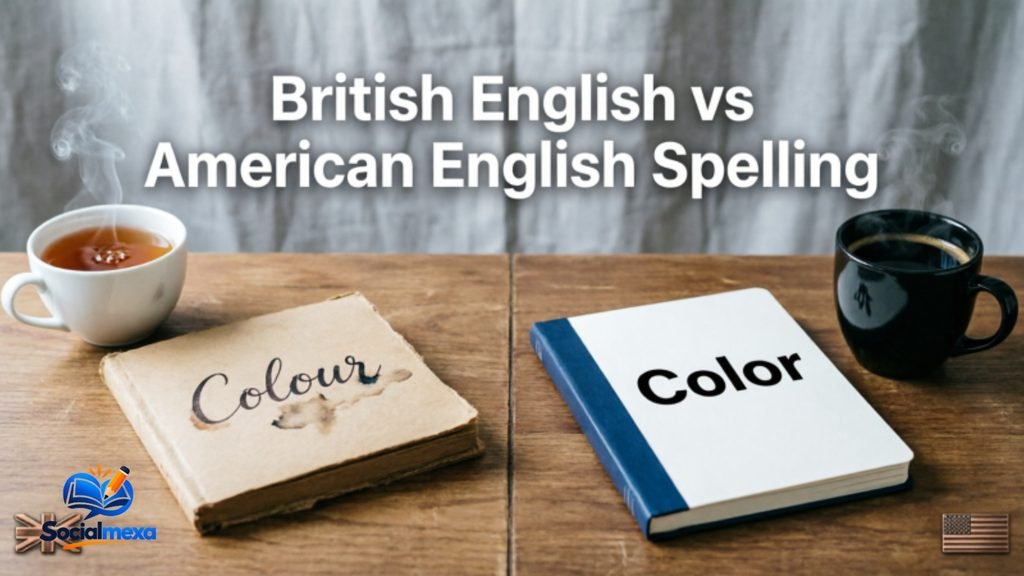
This is really the heart of the confusion, so let’s break it into two clean sections.
Emphasize
This is the standard spelling across the United States and Canada. If you’re writing for an American audience, a US-based company, or American media, always use “emphasize” with a z.
Example: “The coach emphasized teamwork during practice.”
Emphasise
This is the standard spelling in the United Kingdom, Australia, New Zealand, and most Commonwealth countries. If you’re writing for a British audience, use “emphasise” with an s.
Example: “The report emphasised the need for better funding.”
Neither version is more correct than the other. They’re regional cousins, not rivals.
Emphasize or emphasize on
Here’s a mistake that trips up a lot of writers, especially non-native English speakers. You do not say “emphasize on something.” You simply say “emphasize something.”
Wrong: “She emphasized on the importance of sleep.” Right: “She emphasized the importance of sleep.”
The confusion usually comes from mixing up “emphasize” with “focus on” or “insist on,” which do take “on” after them. “Emphasize” does not need that extra word. Drop the “on” and the sentence instantly sounds cleaner.
Which Spelling Should You Use?
The real answer depends entirely on your audience, not on personal preference.
- Writing for a US client, American blog, or US-based business? Use emphasize.
- Writing for a UK, Australian, or international British-style publication? Use emphasise.
- Writing for a global audience with no clear regional target? Pick one spelling and stay consistent throughout the entire piece.
The biggest error is not choosing the wrong spelling. It’s switching between both in the same document. Google, editors, and readers all notice that kind of inconsistency fast.
Emphasize or emphasise meaning
Both words share one identical meaning: to draw special attention to something, or to treat it as more important than the surrounding information.
Think of it like underlining a sentence, except the underlining happens through word choice instead of a pen. When you emphasize something, you’re telling your listener or reader, “Pay closer attention to this part.”
Synonyms include stress, highlight, underscore, and accentuate. All of them point back to the same core idea of importance.
Common Mistakes with Emphasize or Emphasise

A few slip-ups show up again and again, even among fluent writers.
- Mixing spellings in one document. Starting with “emphasize” and later typing “emphasised” confuses readers and looks careless.
- Adding “on” after the verb. As covered earlier, “emphasize on” is incorrect in standard English.
- Confusing “emphasize” with “emphasis.” One is a verb (emphasize), the other is a noun (emphasis). “I want to emphasis this” is wrong. It should be “I want to emphasize this.”
- Overusing the word. If every sentence in your writing emphasizes something, nothing actually stands out anymore. Save it for moments that genuinely need weight.
Emphasize or Emphasise in Everyday Examples
Seeing the word in real sentences makes it stick better than any rule ever could.
American style (emphasize): “The manager emphasized deadlines during the meeting.” “Doctors emphasize the value of regular exercise.”
British style (emphasise): “The teacher emphasised neat handwriting.” “The article emphasised climate action.”
Notice the sentences carry the exact same tone and structure. Only the spelling shifts based on region.
Emphasize or Emphasise pronunciation
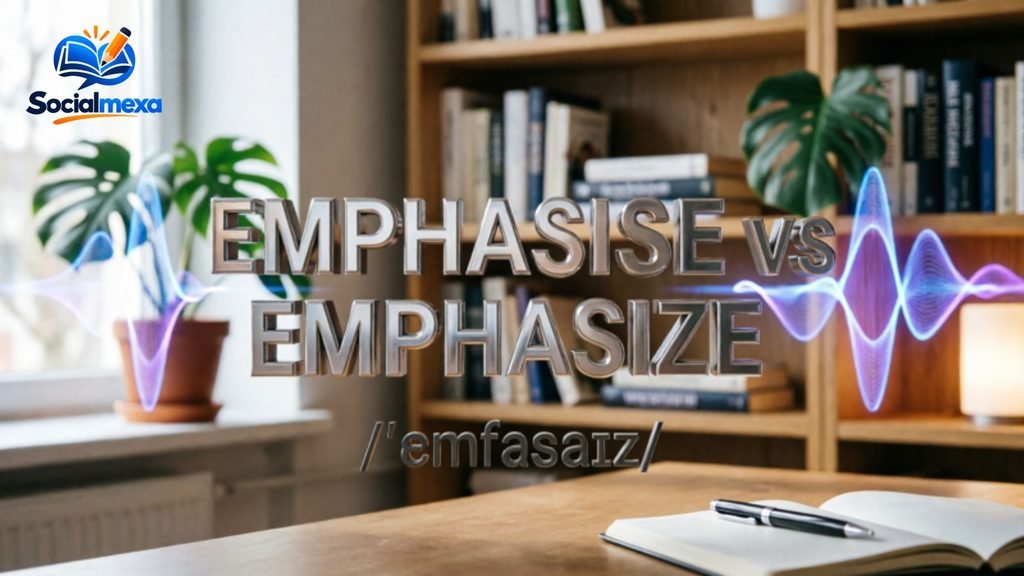
Here’s a small relief. Both words are pronounced exactly the same way, regardless of which spelling you use.
It sounds like EM-fuh-size, with the stress landing on the first syllable. The letter difference between z and s does not change how the word sounds out loud, so speakers rarely notice which spelling someone prefers unless they see it written down.
Is emphasises a word
Yes, “emphasises” is a real and correctly spelled word. It is simply the British third-person singular form of “emphasise,” used the same way “emphasizes” is used in American English.
Example: “The new policy emphasises transparency.”
If you’re writing in British English and referring to something in present tense involving “he,” “she,” or “it,” this is the correct form to use.
Emphasise Oxford dictionary
The Oxford English Dictionary, which follows British spelling conventions, lists “emphasise” as the primary form, with “emphasize” noted as an accepted variant, largely because Oxford’s own style guide has historically supported the “ize” ending in many words based on Greek origin.
This surprises a lot of people. Even though “emphasise” feels more traditionally British, Oxford has long permitted “ize” spellings across many verbs, including this one. In everyday UK usage though, “emphasise” remains far more common in newspapers, schools, and general writing.
Emphasize or Emphasise – Google Trends & Usage Data

Search interest data consistently shows a clear regional pattern. “Emphasize” dominates search volume in the United States and Canada, while “emphasise” leads searches across the United Kingdom, Australia, and India’s more formal or academic writing contexts.
Globally, “emphasize” tends to show higher overall search volume, mainly because the US has a larger English-speaking population contributing to search data. But within UK-based platforms and publications specifically, “emphasise” remains the dominant and expected spelling.
If you’re producing content for global SEO, this matters. Google often serves region-specific results, so matching your spelling to your target country can genuinely affect how your content ranks locally.
Comparison Table: Emphasize or Emphasise
| Feature | Emphasize | Emphasise |
| Region | American English | British English |
| Common In | US, Canada | UK, Australia, NZ |
| Pronunciation | Same | Same |
| Meaning | Same | Same |
| Noun Form | Emphasis | Emphasis |
| Oxford Listing | Accepted variant | Primary form |
| Typical Usage | Business, US media | News, UK academic writing |
Emphasize noun
This trips people up constantly, so it deserves its own clear section. There is no such word as “emphasize” used as a noun. The noun form of this word is simply emphasis, with no z or s ending in “ize” or “ise” at all.
Wrong: “Put more emphasize on this point.” Right: “Put more emphasis on this point.”
Remember it this way: emphasize is the action, emphasis is the thing itself.
FAQs About Emphasize or Emphasise
What does “emphasise” mean?
“Emphasise” means to give special importance or attention to something, typically in British English spelling.
What does “emphasize” mean?
“Emphasize” carries the identical meaning as “emphasise,” to stress or highlight something as important, but it’s the American English spelling.
How do you spell “emphasizing” in the UK?
In British English, it’s spelled “emphasising,” following the same s pattern as “emphasise.”
Is it correct to say “emphasize on” or “emphasis on”?
Neither works perfectly on its own without context. “Emphasize” should not be followed by “on” (say “emphasize the point,” not “emphasize on the point”). However, “emphasis on” is correct when using the noun form, as in “put emphasis on this.”
Conclusion (Emphasize or Emphasise)
At the end of the day, “emphasize” and “emphasise” are not competing for correctness. They’re simply speaking two different English dialects. Pick emphasize for American audiences, emphasise for British ones, and stay consistent once you choose. Get that right, and this small spelling debate stops being confusing and starts being second nature.

Emily Carter is an English language writer who creates simple guides on grammar, word meanings, spelling, slang, and everyday English. Her goal is to make confusing language topics clear, practical, and easy to understand.
4 thoughts on “Emphasize or Emphasise? Discover the Correct Spelling”