

You are typing a sweet message to someone you care about, and you stop for a second. Honey or hunny: which one is right? Both spellings appear in texts, captions, and nicknames every day, so it is easy to feel unsure.
This article gives you the short answer first. Then it explains the meaning, origin, and usage of each spelling, including how American and British English treat them. You will also find simple examples, common mistakes, and an easy memory trick, so you can choose the right word quickly in texts, social posts, and formal writing.
Honey
Honey is the standard English spelling. It names the sweet, sticky food made by bees, and it is also a common term of endearment for someone you love.
Hunny
Hunny is an informal, playful spelling. It is not standard English, but people use it online as a cute way to write the nickname.
Honey Meaning in Chat
In a chat, “honey” usually works as a friendly or loving nickname. A partner, a parent, or a close friend might use it to sound warm and affectionate. The tone depends on the relationship and the words around it.
The spelling “honey” looks neat and clear on any screen. If you are not sure how someone will read your message, it is the safer choice.
| Related Articles You’ll Love |
| Shinny or Shiny? Discover the Correct Spelling Fast |
| Muah or Mwah? Discover the Correct Spelling Fast |
| Devine or Divine? Discover the Correct Spelling Fast |
Honey or Hunny – Quick Answer
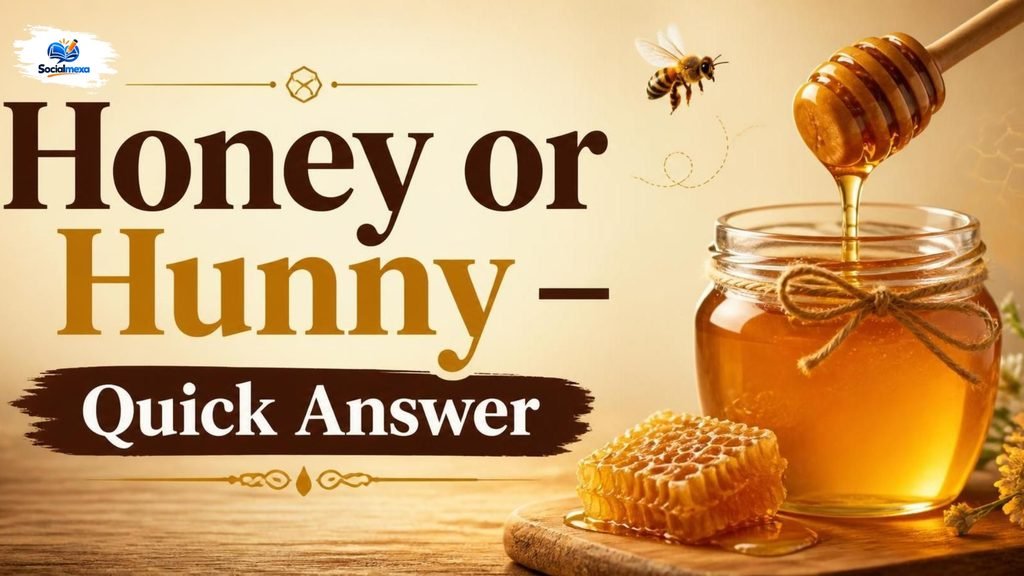
The correct spelling is honey. “Hunny” is a casual variation that many people type on purpose for a softer, cuter feel. It is not wrong in a text to a partner, but it is not the standard spelling.
Examples:
- “Honey, dinner is ready.”
- “Thanks, honey, that was kind.”
- “Good morning, hunny!” (casual text only)
- “I bought local honey at the farmers market.”
Simple Rule:
Use “honey” for the food and for any writing that should look correct. Use “hunny” only when you want a playful, informal tone with someone who will understand the joke.
Is It Honey or Hunny When Talking to Female
The spelling does not change based on gender. Whether you are writing to a girlfriend, a wife, a daughter, or a friend, “honey” is the correct form. The word itself carries no rule about who can receive it.
What does change is the setting. Calling a close partner “honey” feels natural, while calling a coworker or a stranger “honey” can sound too personal or even patronizing. In that case, a name is a better choice than any nickname.
The Origin of Honey or Hunny
Both spellings trace back to the same sweet word, but they took different paths. One came through centuries of ordinary language use. The other grew out of casual writing and pop culture.
Origin of “Honey”
“Honey” comes from the Old English word hunig, which belongs to a family of old Germanic words for the same food. Over time the spelling settled into the form we use today. By the time dictionaries began fixing standard spellings, “honey” was the accepted version.
The use of “honey” as a pet name is also old. People have long compared loved ones to something sweet, and the comparison stuck.
Origin of “Hunny”
“Hunny” is a spelling variation that mirrors how the word sounds. It is widely linked to the way the bear in the Winnie-the-Pooh stories writes the word, which helped make the spelling feel childlike and sweet. Texting and social media then spread it further.
No major dictionary lists “hunny” as the correct spelling of the food. It lives mostly in informal writing, nicknames, and usernames.
Honey vs Hunny – Meaning Explained
The two spellings point to the same ideas, but they do not have the same status. One is standard and flexible. The other is a stylistic choice.
What Does “Honey” Mean?
“Honey” has two main meanings. It is the sweet substance bees make from nectar, and it is a term of endearment used for someone dear to you. It can also describe a golden-brown color.
Examples:
- “She added honey to her tea.”
- “Honey, can you grab my keys?”
- “The walls were painted a warm honey color.”
What Does “Hunny” Mean?
“Hunny” usually means the affectionate nickname, written in a cute or playful way. It rarely refers to food in serious writing. Most readers will understand it right away, but they will see it as informal.
Examples:
- “Miss you, hunny!”
- “Happy birthday to my favorite hunny.”
- “Hunny, I’m running late.”
Honey or Hunny Meaning
When people ask about the meaning of honey or hunny, the answer is simple. The meaning is the same in most cases, which is a sweet nickname. The real difference is spelling and tone.
“Honey” is the dictionary form and works in every setting. “Hunny” is a style choice that signals playfulness, so it fits best in casual messages.
British English vs American English Usage
Many people expect a spelling split here, like “color” and “colour.” There is none. Both American and British English spell the word “honey,” and both treat “hunny” as informal.
The only difference is habit. Some users in both countries use “hunny” in texts and on social media, but it is not tied to one region.
Comparison Table
| Feature | American English | British English |
| Standard spelling | honey | honey |
| Spelling “hunny” | Informal, texting | Informal, texting |
| Used as nickname | Yes | Yes |
| Accepted in formal writing | Only “honey” | Only “honey” |
Which Spelling Should You Use?
The best choice depends on where you are writing and who will read it. A quick check of your audience usually settles it.
Use “Honey” When:
- You are writing about the food.
- You are writing an email, essay, report, or school paper.
- You want the nickname to look clear and correct.
- You are unsure how the reader will react.
Use “Hunny” When:
- You are texting a partner or close friend.
- You want a cute, playful tone.
- You are writing a casual social media caption.
Best Practice:
Default to “honey.” Use “hunny” only when the setting is relaxed and the reader knows your style. Spelling a word on purpose is fine, but spelling it by accident can look like a mistake.
Hunny or Honey for Husband
If you are choosing a nickname for your husband, either spelling is a matter of taste. “Honey” is the standard form and works in cards, notes, and messages. “Hunny” suits a playful text.
Some couples use the nickname in public, and others keep it private. What matters is that both of you like it. The spelling is a small detail compared with the tone you want.
Common Mistakes with Honey or Hunny

A few small errors come up again and again. Knowing them makes your writing cleaner.
Mistake 1
Using “hunny” in formal writing. A business email or school paper should use “honey” if the word appears at all.
Mistake 2
Assuming “hunny” is correct for the food. Writing “a jar of hunny” in a recipe or article will look like an error.
Mistake 3
Mixing both spellings in the same message. Pick one spelling and keep it consistent.
Mistake 4
Confusing “honey” with “money” or “hone” when typing fast. A quick read-through catches most of these slips.
Hunny Meaning
“Hunny” is a casual spelling of the affectionate nickname. It carries a soft, sweet tone, much like “babe” or “sweetie.” It does not have its own separate dictionary meaning.
If someone sends you “hunny,” they most likely mean the same thing as “honey.” The spelling just adds a playful touch, and the context tells you how serious or flirty the message is.
Honey or Hunny in Everyday Examples
Seeing the words in real situations makes the rule easier to remember. Here is how each spelling can look in different settings.
Text Messages
- “Honey, call me when you land.”
- “Hunny, I’m outside!”
Social Media
- “Date night with my honey.”
- “Happy anniversary, hunny!”
Professional Writing
- “The recipe uses two tablespoons of honey.”
- “Please add the honey after the mixture cools.”
Relationships
- “Honey, I love you.”
- “You are my hunny.”
Honey or Hunny – Google Trends & Usage Data
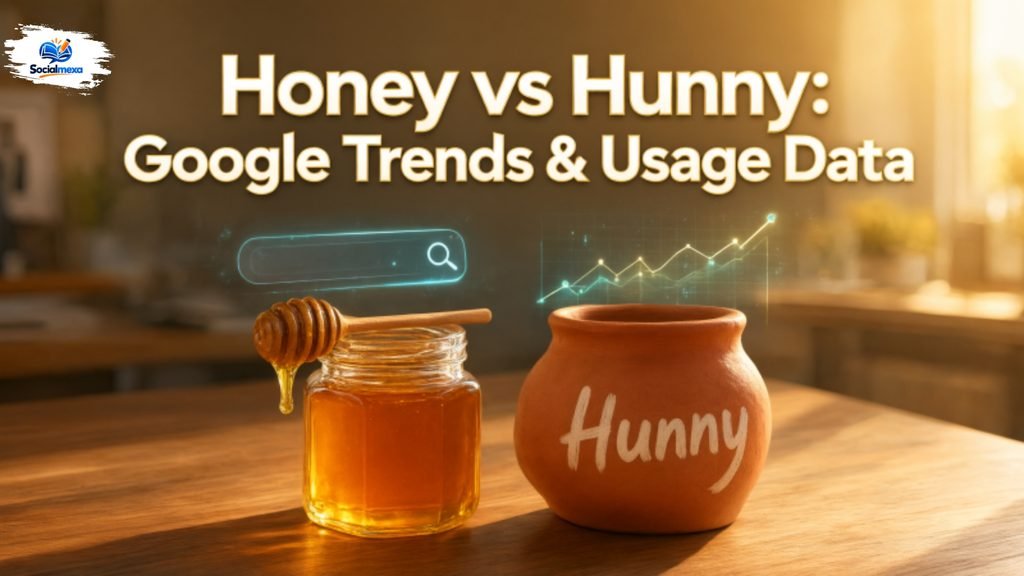
People often search for the spelling because both forms appear so often online. Search interest tends to rise around holidays and anniversaries, when nicknames and messages are common. For exact and current numbers, you can check Google Trends yourself, since the results change over time.
Key Insight:
Many searchers want a quick confirmation of the correct spelling. The consistent answer is that “honey” is standard, and “hunny” is an informal variation.
Hunny Meaning from a Girl
When a girl writes “hunny,” the meaning depends on the relationship and the tone. Between close friends, it is usually a warm, friendly nickname. Between partners, it can be affectionate or playful.
There is no fixed rule, so read the full message. Emojis, punctuation, and the conversation around the word give better clues than the spelling alone.
Comparison Table: Honey vs Hunny
| Feature | Honey | Hunny |
| Correct spelling | Yes | No, informal variant |
| Refers to the food | Yes | Rarely |
| Used as a nickname | Yes | Yes |
| Formal writing | Appropriate | Not appropriate |
| Texting | Common | Common, playful |
| Dictionary listed | Yes | No |
Honey vs Hunny in Relationships
In relationships, the nickname matters more than the spelling. Still, the spelling can change how the message feels.
Honey:
“Honey” feels warm, steady, and classic. It works for long-term couples, parents, and anyone who prefers a clear, traditional style.
Hunny:
“Hunny” feels cute and lighthearted. It suits early dating, jokes, and casual chats where a playful tone is welcome.
Hunny Meaning in Love
In a love message, “hunny” signals affection with a playful twist. It tells the reader you are being sweet and relaxed rather than formal. Many people choose it because it looks softer on the screen.
It does not mean more or less love than “honey.” The feeling comes from the message and the relationship, not from the extra letter swap.
Why “Hunny” Became Popular Online
Texting and social media reward short, expressive, and cute writing. Spelling a word the way it sounds, or with a playful twist, is a common habit in these spaces. “Hunny” fits that pattern well.
The Winnie-the-Pooh connection also adds to its charm, since the spelling feels childlike and sweet. Together, these factors helped it spread in captions, usernames, and chat nicknames.
Simple Trick to Remember the Difference
A short memory rule can save you from second-guessing. Link the spelling to the kind of writing you are doing.
Easy Memory Rule
Think of the “e” in “honey” as standing for “everyday English.” If you want the correct, standard spelling, keep the “e.”
Quick Reminder
- Food or formal writing: honey
- Playful text: hunny
- Not sure: honey
I’m Honey Meaning
The phrase “I’m honey” is unusual and depends on context. It might be a nickname someone uses for themselves, a username, or a playful way to say “I’m sweet.” It is not a standard English expression.
If you see it in a message, check who wrote it and why. In a casual chat, it is most likely a friendly or flirty self-description, and the correct spelling is still “honey.”
FAQs About Honey or Hunny
Do you call your bf honey or hunny?
Either works, but “honey” is the standard spelling. Use “hunny” only if you both like the playful, casual style.
Is Hunny flirty?
It can be. The spelling adds a cute tone, but the flirty feeling depends on the message, the relationship, and the context.
Is honey a flirty word?
Sometimes. “Honey” can be affectionate, friendly, or flirty depending on who says it and how they say it.
What does hunny mean to a girl?
Usually it means a sweet, affectionate nickname. The exact feeling depends on her relationship with you and the tone of the message.
Is Hunny a real word?
Not as a standard spelling. It is an informal variation of “honey” used in texts, nicknames, and social media.
Conclusion (Honey or Hunny)
The correct spelling is “honey.” It works for the food, for formal writing, and for the nickname you use with someone you care about. “Hunny” is an informal, playful variation that is fine for casual texts but does not belong in standard writing. American and British English follow the same rule here.
So the next time you wonder about honey or hunny, ask where the message is going. If it is a school paper, an email, or a recipe, choose “honey.” If it is a cute text to a partner who will enjoy the playful style, “hunny” is a harmless choice. When in doubt, stay with the standard spelling.

Emily Carter is an English language writer who creates simple guides on grammar, word meanings, spelling, slang, and everyday English. Her goal is to make confusing language topics clear, practical, and easy to understand.