

Every piece of writing needs a clean landing. “In summary” is a safe way to land, but it gets tired fast, especially when it opens the last paragraph of every email, essay, and report you write.
This guide groups more than 150 alternatives by meaning, tone, and situation, so you can pick the one that fits your reader instead of guessing.
Quick answer: The best alternative to “in summary” depends on how formal you are and what you are wrapping up. Use “in conclusion” or “overall” for most writing, “in short” or “to recap” for a quick restatement, and “the bottom line is” when a reader needs the decision or main point. Casual options like “long story short” belong in conversation, not in essays.
What “In Summary” Means
“In summary” signals that you are about to restate the main points of what came before, in a shorter form. It tells the reader, “Here is the compressed version.”
It works best after you have actually covered something. If nothing came before it, the phrase has nothing to summarize.
Writers usually look for alternatives for three reasons: the phrase feels repetitive, it feels too stiff for the setting, or they want to signal something more specific, such as a verdict, a lesson, or a next step.
| Related Articles You’ll Love |
| Pricey or Pricy? Discover the Correct Spelling Fast |
| Followup or Follow Up? Get It Right Every Time |
| Thiefs or Thieves? Get the Correct Spelling Fast |
How These Synonyms Differ
Not every wrap-up phrase does the same job. Some groups of phrases overlap, but they are not interchangeable.
- Restating: “to recap,” “to sum up,” and “in summary” repeat earlier points in brief.
- Judging: “overall,” “on balance,” and “all in all” give a general verdict.
- Distilling: “in essence,” “in a nutshell,” and “the gist is” reduce everything to one core idea.
- Concluding: “in conclusion” and “to conclude” mark the end of an argument.
- Advising: “the bottom line is” and “the key takeaway is” point to what the reader should remember or do.
Pick the job first, then pick the phrase.
Neutral Alternatives for Everyday Writing
These work in blog posts, reports, school writing, and most emails. They are polite without being stiff.
Options:
- Overall
- All in all
- In short
- In brief
- To sum up
- To summarize
- In conclusion
- To conclude
- In closing
- To wrap up
- In the end
- On the whole
- By and large
- In general
- Altogether
- All told
- Briefly
- Put simply
- In a word
- To recap
Overall
“Overall” gives a general judgment after you have looked at several parts. It is flexible and rarely sounds out of place.
Overall, the new schedule saved us time, even though the first week was rough.
In short
“In short” signals that the next sentence is a compressed version of what you said. It suits writing where you want to sound brisk.
In short, the plan is affordable, simple, and easy to test.
In conclusion
“In conclusion” marks the formal end of an argument or talk. It carries more weight than “in summary” because it implies you are reaching a final position, not just repeating points.
In conclusion, remote work succeeds when teams agree on clear communication rules.
Formal and Academic Alternatives
Use these in essays, research writing, reports, and professional documents where precision matters.
Options:
- In sum
- In summation
- Taken together
- On balance
- Ultimately
- In the final analysis
- In light of the above
- Given the above
- Considering the evidence
- Weighing the evidence
- Taking everything into account
- Drawing these points together
- The evidence suggests
- These findings indicate
- As this paper has shown
- As outlined above
- As discussed above
- To draw these threads together
- Collectively
- In essence
- Essentially
- To put the argument briefly
- In view of these findings
- Having considered each factor
- Viewed as a whole
- On the evidence presented
- Based on these results
- Given these results
- To consolidate the main points
Taken together
“Taken together” works when you have several pieces of evidence that point the same way. It tells the reader the pieces matter more as a set.
Taken together, the survey results and interview notes show a clear pattern.
On balance
“On balance” suggests you weighed competing points before reaching a view. Use it when there were real pros and cons.
On balance, the benefits of the change outweigh the cost.
In sum
“In sum” is a shorter, slightly formal cousin of “in summary.” “In summation” is the heavier version. Both fit written arguments better than speech.
In sum, the policy improved access but fell short on funding.
Business and Email Alternatives
Workplace readers skim. They want the point and the next step, so the best phrases here are direct.
Options:
- The bottom line is
- Bottom line
- The key takeaway is
- Key takeaway
- The main point is
- Quick recap
- Here is the short version
- The short version is
- To keep this brief
- To summarize our discussion
- To summarize the key points
- As a quick summary
- In practical terms
- What this means for you
- Where this leaves us
- Here is where we landed
- Next steps in short
- At a glance
- The big picture is
- To pull it together
- To bring this together
- Before I wrap up
- In review
- For quick reference
- To sum it all up
- The upshot is
- The net result is
- The net effect is
- What matters most is
The bottom line is
This phrase puts the decision or main point first. It sounds confident, so use it only when you can back it up.
The bottom line is that we need two more weeks to ship safely.
Key takeaway
“Key takeaway” tells readers what to remember, not just what happened. It works well in meeting notes and reports.
Key takeaway: customers want faster support more than new features.
Casual and Conversational Alternatives
These sound natural when you speak or write in a friendly voice. Most are too relaxed for formal documents.
Options:
- Long story short
- To make a long story short
- In a nutshell
- The gist is
- The gist of it
- Basically
- So basically
- Simply put
- In plain English
- In plain terms
- Short and sweet
- To cut to the chase
- Cutting to the chase
- The long and short of it
- When all is said and done
- All things considered
- At the end of the day
- When it comes down to it
- What it boils down to
- Boiled down
- In a few words
- To keep it short
- Here is the takeaway
- The short story is
- So, in short
- If you remember one thing
- The big takeaway
- Anyway, the point is
Long story short
This tells the listener you are skipping details. It fits stories and chats, and it sounds odd in a report.
Long story short, we missed the train and walked the whole way.
In a nutshell
“In a nutshell” packs the whole idea into one image of something small and contained. It is friendly and informal.
In a nutshell, the app tracks your spending and warns you before you overspend.
Short and Punchy Alternatives for Social Media
Posts, captions, and threads need fast wrap-ups. These keep things tight.
Options:
- TL;DR
- TLDR
- Quick summary
- The short take
- Recap
- Key points
- Takeaways
- Thread recap
- In 30 seconds
- Here is the quick version
- The one-line version
- The 10-second version
- To save you time
- If you are short on time
- Short version
- Highlights
- Main points
- The rundown
- Quick rundown
- The snapshot
- Summed up
- Recapping
- Wrapping up
TL;DR: Drink more water, sleep earlier, and skip the late coffee.
Storytelling and Narrative Alternatives
In stories, you rarely say “in summary.” You signal the ending through time, hindsight, or reflection.
Options:
- Looking back
- When the dust settled
- After everything
- In hindsight
- As it turned out
- In the long run
- When it was all over
- At last
- Finally
- Eventually
- In retrospect
- Through it all
- Taken as a whole
- Looking at the whole picture
When the dust settled, the small bakery had become the busiest shop on the street.
Resume Alternatives
A resume does not use “in summary” as a sentence opener. Instead, you use a section label that does the same job at the top of the page.
Options:
- Professional summary
- Career summary
- Career snapshot
- Profile
- Core strengths
- Key qualifications
- Career highlights
- Summary of qualifications
- Professional overview
- Skills summary
Professional summary: Operations manager with eight years of experience improving warehouse workflows.
Comparison Table: Close Synonyms
| Synonym | Meaning Nuance | Tone | Example Sentence |
| In summary | Restates the main points briefly | Neutral to formal | In summary, the project met its goals and stayed on budget. |
| To sum up | Same idea, with a spoken feel | Neutral | To sum up, we need a bigger team and a clearer plan. |
| In conclusion | Closes an argument or talk | Formal | In conclusion, small habits drive long-term change. |
| Overall | Gives a general judgment | Neutral | Overall, the course was clear and well paced. |
| All in all | Friendly general judgment | Casual to neutral | All in all, it was a great trip. |
| In short | Compresses what came before | Neutral | In short, the fix is cheap and quick. |
| In brief | Same as “in short,” slightly more formal | Neutral to formal | In brief, the contract renews each year. |
| To recap | Repeats earlier points | Neutral | To recap, we agreed on the date, the venue, and the budget. |
| In essence | Names the core idea, not every point | Neutral to formal | In essence, the theory says habits shape identity. |
| In a nutshell | Packs the idea into one line | Casual | In a nutshell, it is a budgeting app for students. |
| On balance | A verdict after weighing both sides | Formal | On balance, the new tool is worth adopting. |
| Taken together | Combines several pieces of evidence | Formal | Taken together, these results support the hypothesis. |
| Ultimately | The final deciding factor | Neutral | Ultimately, trust matters more than speed. |
| The bottom line is | The main point or decision | Direct, business | The bottom line is that we cannot launch before June. |
| Key takeaway | What the reader should remember | Business, neutral | Key takeaway: test early and test often. |
| Long story short | Skips the details | Casual | Long story short, I got the job. |
| The gist is | The general idea only | Casual | The gist is that prices will rise next month. |
| At the end of the day | The final practical truth | Casual | At the end of the day, people want honest service. |
| TL;DR | Ultra-short version, written | Very casual | TL;DR: the update fixes the login bug. |
| In sum | Short, formal wrap-up | Formal | In sum, the evidence is mixed but promising. |
Antonyms and Contrasting Phrases
“In summary” has no perfect opposite. The closest contrasts are phrases that move toward more detail instead of less.
Options:
- In detail
- In depth
- At length
- To elaborate
- To expand on this
- Step by step
- Point by point
- In particular
- Specifically
- For instance
- For example
- Thoroughly
- To begin with
- To start
Use them to open a section or to dig into a point, not to close one.
Related Words and Phrases
These are nouns and labels that often sit next to “in summary” in real writing.
Related terms:
- summary
- recap
- overview
- synopsis
- digest
- abstract
- outline
- rundown
- wrap-up
- takeaway
- gist
- highlights
- snapshot
- roundup
- executive summary
- key points
- main idea
They are not all identical. A synopsis often describes a story or plot. An abstract usually appears at the start of a paper. An executive summary sits at the top of a business report. A recap looks backward, and a takeaway looks forward to what matters.
Using the Right Phrase by Context
Keep it short and useful. “To recap,” “the short version is,” or “the bottom line is” all work. If you need action, end with the next step.
To recap, I will send the draft Tuesday, and you will reply by Friday.
Essay
Choose “in conclusion,” “overall,” “in sum,” or “on balance.” Avoid casual phrases like “long story short.”
Conversation
“Basically,” “long story short,” and “the gist is” sound natural when speaking. Keep it light.
Social Media
“TL;DR,” “quick recap,” and “key points” help busy readers decide whether to keep reading.
Storytelling
Show the ending through time and reflection. “In hindsight” or “when the dust settled” feels more natural than a summary label.
When Not to Use These Synonyms
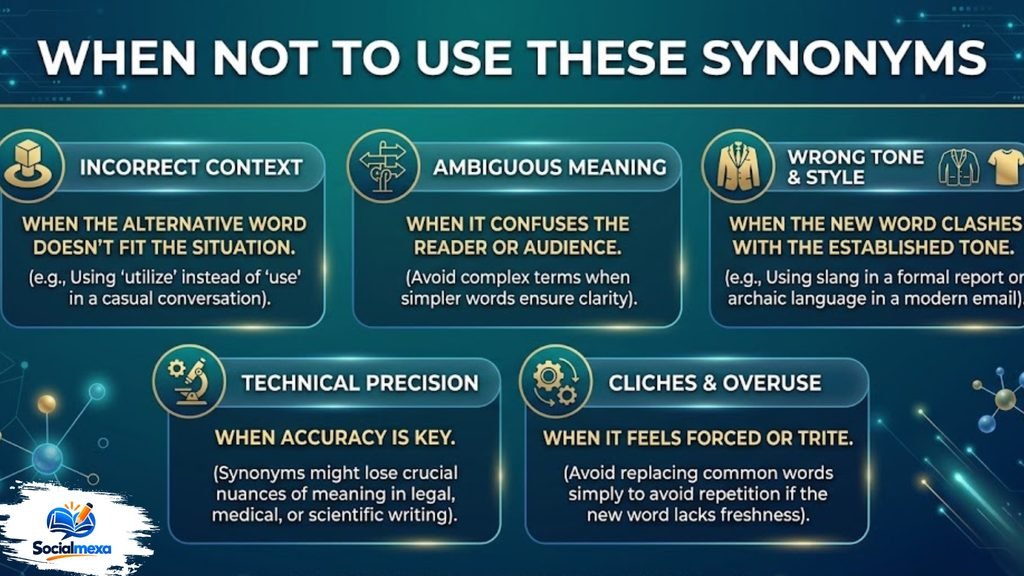
Some phrases look similar but cause problems in the wrong place.
- Long story short: Avoid it in formal reports, academic work, or client emails.
- TL;DR and TLDR: Skip them in professional letters, resumes, and school essays.
- In a nutshell: Not ideal for legal, scientific, or highly technical writing, where oversimplifying can mislead.
- At the end of the day: Can sound like filler in formal writing, and it often adds nothing.
- In conclusion: Do not use it halfway through a piece. It promises an ending.
- The bottom line is: Avoid it when the point is uncertain or sensitive. It sounds final.
- On balance: Only use it when you truly weighed more than one side.
- In essence and essentially: Do not use them when the reader needs every detail. They signal that you are leaving things out.
- Thus, therefore, hence, and consequently: These show cause and effect. They are not true summary phrases, so they cannot replace “in summary.”
Frequently Asked Questions
Is “in summary” the same as “in conclusion”?
Not exactly. “In summary” restates main points, while “in conclusion” marks the end of an argument and often includes a final position. In many pieces you can use either, but “in conclusion” feels more final.
Do I put a comma after “in summary”?
Yes. When “in summary” opens a sentence, a comma usually follows. For example: “In summary, the plan works.”
Is “in summary” formal?
It is neutral to mildly formal. It fits reports, essays, and presentations, and it can still sound fine in a professional email.
What is the difference between “in summary” and “to summarize”?
They do the same job. “To summarize” is built around a verb, so it can feel a little more active and spoken. “In summary” is a ready-made opener that is easy to drop in.
Is it “in sum” or “in summary”?
Both are used. “In sum” is shorter and a bit more formal. “In summary” is more common in everyday writing.
What can I say instead of “in summary” in an email?
Try “to recap,” “the short version is,” “the key takeaway is,” or “the bottom line is.” Choose based on whether you are restating, simplifying, or pointing to a decision.
Can I use “in summary” at the start of an essay?
No. It belongs after the material it covers. At the start, use an opening phrase like “this essay examines” or “this paper argues.”
Do I need a summary phrase at the end of every piece?
No. Short messages and tight articles often do not need one. If your final paragraph is already clear, a summary phrase can just repeat yourself.
Which alternative is best for a school essay?
“In conclusion,” “overall,” “in sum,” and “on balance” are all safe. Match the phrase to your argument, not just to your tone.
Conclusion
“In summary” is not a bad phrase. It just does one job, and many pieces of writing need a slightly different one. Some need a verdict, some need a lesson, and some need a gentle return to the main idea. Choosing the right wrap-up phrase makes your ending feel intentional.
When you are unsure, start with the reader. A friend reading a casual post will like “long story short.” A manager reading a report wants “the bottom line is.” A teacher grading an essay expects “in conclusion” or “overall.” Pick the phrase that matches the moment, and your ending will sound natural.

Emily Carter is an English language writer who creates simple guides on grammar, word meanings, spelling, slang, and everyday English. Her goal is to make confusing language topics clear, practical, and easy to understand.
1 thought on “150+ Powerful Ways to Say “In Summary” for Clear Writing”