
You typed a sentence, paused, and stared at the word. Is it useing or using? Your fingers moved faster than your brain, and now you are not sure which one is correct. Here is the short answer before you scroll any further: using is the only correct spelling. Useing is a common typo, not a real word. Keep reading and you will never second guess this again.
Useing
Useing is not a word in standard English. It shows up often because people apply a spelling rule incorrectly, adding “ing” without removing the silent “e” at the end of “use.” Spell checkers usually catch it right away and mark it red. If you have written it before, do not worry. It is one of the most common typing slips in English, right up there with “receive” instead of “receive.”
Using
Using is the correct present participle form of the verb “use.” It means applying something, operating something, or making use of a tool, method, or resource. You will see it everywhere, from technical manuals to casual texts. For example: “She is using a new app to track her expenses.” That sentence would look odd and incorrect with “useing” in its place.
Useing or using meaning
The meaning behind both versions is identical, because only one of them is actually a word. Using means the act of employing something for a purpose right now or in an ongoing way. It comes from the base verb “use,” which means to take, apply, or utilize something. There is no separate meaning attached to “useing.” It simply does not exist in dictionaries, so it carries no definition of its own.
| Check Out These Articles |
| Realy or Really: Which Spelling Is Correct? |
| Likeable or Likable: Which Spelling Is Correct? |
| Skis or Skiis? Discover the Correct Spelling & Meaning |
Useing or Using – Quick Answer
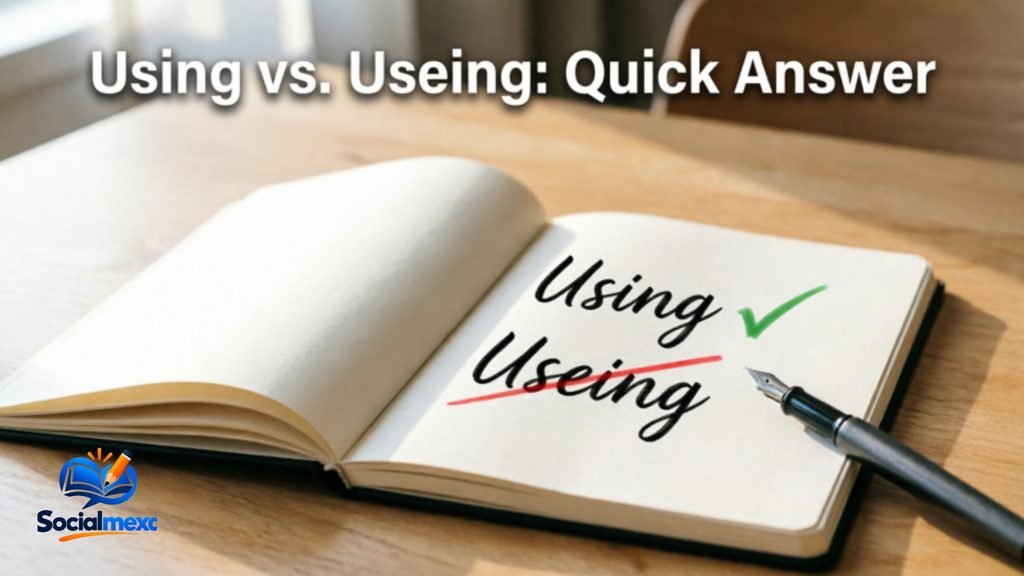
If you need a one line rule to remember forever, here it is: drop the silent “e” before adding “ing.” Use becomes using, not useing. This rule applies to almost every English verb ending in a silent “e,” such as make to making, write to writing, and hope to hoping. Once this clicks, you will stop hesitating every time you type it.
Useing or Using? Why the Confusion?
So why do so many people write it wrong? Blame the ear, not the brain. When you say “using” out loud, it sounds like it should keep every letter from “use.” English pronunciation and English spelling do not always agree, and this is one of those small betrayals. Add in autocorrect fatigue and fast typing on phones, and “useing” sneaks in more often than anyone would like to admit.
Another reason is habit transfer. Words like “seeing” or “agreeing” keep their double letters, so some writers assume every “ing” word should hold onto its full spelling. English grammar, unfortunately, does not play fair like that.
Useing or using exercises
Practice makes the rule permanent. Try filling in the blanks with the correct spelling:
- I am ______ a new laptop for work.
- She was ______ her savings to buy a car.
- They are ______ social media to grow their business.
Every blank above should be filled with using. If your instinct says “useing,” pause and remove that extra “e” before you commit to the sentence.
Useing or using synonym
Since useing is not a real word, it has no synonym of its own. But using has plenty of alternatives depending on context. Common synonyms include employing, applying, utilizing, operating, and working with. For example, “employing a new strategy” carries a similar meaning to “using a new strategy,” just with a slightly more formal tone.
Examples
Seeing the correct word in real sentences helps the spelling stick faster than any rule alone. Below are a few natural examples that show using in everyday context, followed by a closer look at incorrect versions so you can spot the difference instantly.
Useing or using examples
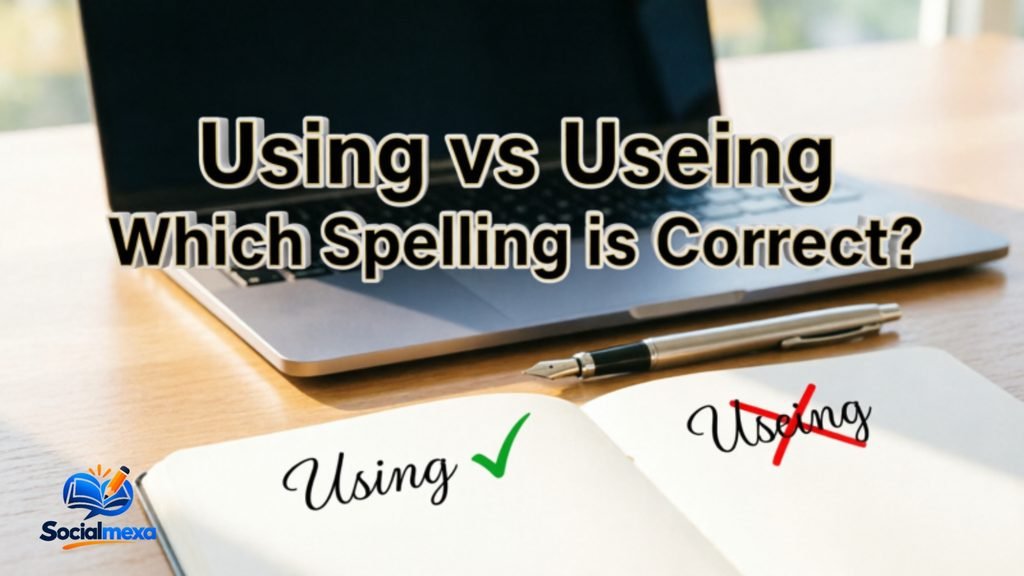
Correct: “He is using a wrench to fix the pipe.” Incorrect: “He is useing a wrench to fix the pipe.”
Correct: “We were using the wrong password.” Incorrect: “We were useing the wrong password.”
Notice how the incorrect version simply looks unfinished, almost like a typo mid sentence. Once you train your eye to catch that extra “e,” it becomes obvious within seconds.
The Origin of Using
The word “use” traces back to the Latin word “uti,” which meant to make use of or to employ. It passed through Old French as “user” before settling into Middle English. The “ing” suffix itself is a native English addition, used to form continuous or participle verb tenses. When English speakers began adding “ing” to “use,” the silent “e” was dropped following a spelling pattern that had already become standard for verbs like “hope” and “write.” This is not a modern rule invented by grammar textbooks. It has been consistent for centuries.
British English vs American English Spelling
Here is some good news. Unlike words such as “color” versus “colour” or “organize” versus “organise,” this particular word does not change between British and American English. Using stays exactly the same on both sides of the Atlantic. There is no regional variation, no alternate accepted spelling, and no style guide that permits “useing” under any circumstance. This makes it one of the more reliable words in English, free from the usual British versus American spelling drama.
Which Spelling Should You Use?
Always choose using. There is no context, formal or informal, academic or casual, where “useing” is acceptable. Whether you are writing a resume, a text message, a school essay, or a business email, the rule never changes. If you remember nothing else from this article, remember this line: silent “e” gets dropped before “ing.”
Common Mistakes with Useing or Using
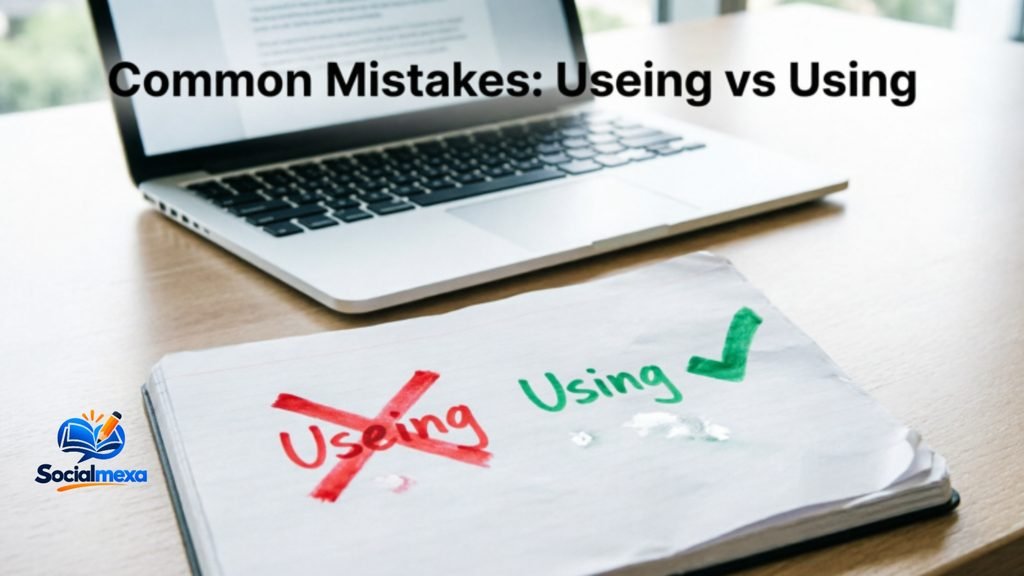
Beyond the basic spelling slip, a few related mistakes tend to travel together with this one:
- Writing “useing” in professional documents, which can hurt credibility instantly
- Confusing “using” with “use” when a sentence calls for a completed action instead of an ongoing one
- Mixing up “using” with “use to,” which should actually be “used to” when talking about past habits
Catching these small errors early keeps your writing sharp and polished.
Using in a Sentence
Seeing the word in varied sentence structures helps lock in the correct usage. Here are a few more examples across different tones:
Casual: “I am using my phone to record this.” Professional: “Our team is using data driven strategies to improve results.” Academic: “The researcher is using a control group to test the hypothesis.”
Every version, regardless of tone, spells the word the exact same way.
Useing or using grammar
Grammatically speaking, “using” functions as a present participle or gerund. As a participle, it pairs with helping verbs like “is,” “was,” or “are” to form continuous tenses, such as “She is using.” As a gerund, it can act like a noun, such as “Using this method saves time.” Useing cannot fill either role because it fails at the most basic level, which is simply not being a recognized word in English grammar.
Techniques to Remember the Correct Spelling
A few quick memory tricks can make this permanent:
- Picture the silent “e” jumping out of the word to make room for “ing”
- Remember the pattern from other familiar words like “hope to hoping” or “smile to smiling”
- Say the rule out loud once: drop the e, add ing
- Type the word a few times intentionally until your fingers memorize the correct motion
Muscle memory often beats rule memory when it comes to typing accuracy.
Using in Everyday Examples
You encounter this word constantly without even noticing. Software prompts say “using cookies to improve your experience.” Recipes mention “using fresh ingredients for better flavor.” Fitness apps track “using calories burned during a workout.” It shows up in instructions, contracts, tutorials, and casual conversation alike, which is exactly why getting the spelling right matters so much. A single misspelled word can make an otherwise polished piece of writing look rushed.
Useing or Using – Google Trends & Usage Data

Search data consistently shows that people type “useing” into search engines far more often than expected, usually followed immediately by a correction search like “useing or using.” This pattern reveals something interesting. It is rarely a knowledge gap and almost always a typing reflex, since most people already know the correct word once they see it written out. Search engines have gotten better at recognizing this intent and now often display the correct spelling directly in results, which is part of why getting a clear, direct answer matters more than a long winded explanation.
How do you spell used
Used is the correct spelling for the past tense and past participle of “use.” For example, “I used my card yesterday” or “This tool has been used for years.” No extra “e” gets added here either. The base word “use” simply takes a “d” to form the past tense, following the standard pattern for regular verbs ending in a silent “e.”
Comparison Table: Useing or Using
| Feature | Useing | Using |
| Correct spelling | No | Yes |
| Recognized in dictionaries | No | Yes |
| Grammatical function | None | Present participle and gerund |
| Common in | Typos and autocorrect misses | All professional and casual writing |
| Accepted in British English | No | Yes |
| Accepted in American English | No | Yes |
How do you spell suing
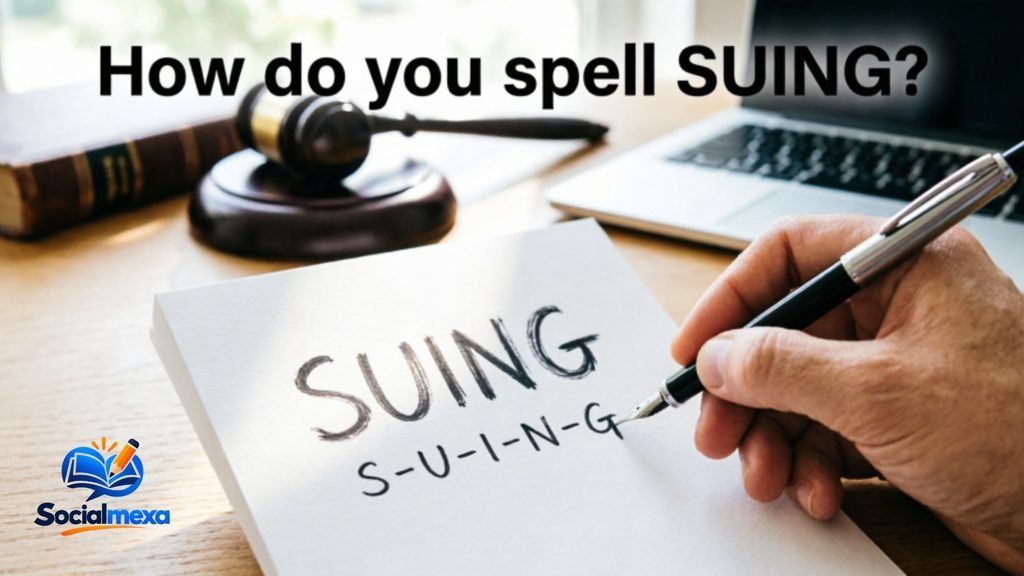
Suing is the correct spelling for the present participle of “sue,” meaning to take legal action against someone. Just like “using,” the silent “e” in “sue” drops before adding “ing.” For example, “The company is suing its former supplier over a broken contract.” A common mistake here would be writing “sueing,” which follows the exact same incorrect pattern as “useing.”
FAQs About Useing or Using
Is it correct to say “use to”?
No. The correct phrase is “used to,” as in “I used to play basketball.” “Use to” without the “d” is a common mistake, especially in casual speech where the “d” sound gets softened or dropped entirely.
What is the meaning of using?
“Using” means applying, operating, or employing something for a specific purpose. It describes an action that is happening now or continuing over time, such as using a tool, using a method, or using a resource.
How do we spell “using”?
U-S-I-N-G. The base word “use” loses its silent “e” before the “ing” is added, which is the same pattern followed by many other English verbs.
Is it your using or you’re using?
“You’re using” is correct when describing an action, since “you’re” is a contraction for “you are,” as in “You’re using the wrong charger.” “Your using” is incorrect because “your” is possessive and needs a noun to follow it, not a verb form like “using.”
Conclusion
The confusion between useing and using comes down to one simple habit, forgetting to drop the silent “e” before adding “ing.” Now that you know the rule, the origin, and the common mistakes tied to it, this typo should never slip past you again. Keep the phrase in mind, drop the e, add ing, and you will spell it correctly every single time.

Emily Carter is an English language writer who creates simple guides on grammar, word meanings, spelling, slang, and everyday English. Her goal is to make confusing language topics clear, practical, and easy to understand.
3 thoughts on “Useing or Using? Learn the Correct Spelling Fast”