


Typing followup or follow up into a search bar usually means you froze halfway through an email. You wrote the word, stared at it, and now every version looks wrong. That doubt slows you down, and a typo in a client message can make you look careless. Good news: the rule takes ten seconds to learn. Use two words for an action. Use a hyphen for a thing.
Quick Answer
Use follow up (two words) when it works as a verb: “I will follow up tomorrow.” Use follow-up (with a hyphen) when it works as a noun or adjective: “Thanks for your follow-up email.” The one-word spelling followup is not standard in most style guides, so skip it in anything professional.
That is the whole rule. The rest of this guide shows why it works, where people slip, and how to make it stick.
Meaning and Definition of Each Word

Three spellings float around the internet, and each one plays a different role. Let us meet them one at a time, starting with the one that does the actual work.
1. Follow Up (Verb)
Follow up means to take another step after an earlier action, usually to check progress, add information, or finish something that was left open. It is a phrasal verb, which means two words team up to make one action.
- “I will follow up with the vendor on Monday.”
- “She followed up after the interview.”
Notice that the verb changes form like any other verb: follow up, follows up, followed up, following up.
| Related Articles You’ll Love |
| Emphasise or Emphasize? Get the Spelling Right |
| Trys or Tries: Which Spelling Is Correct? (Simple Grammar Guide) |
| Lessee or Leasee? Learn the Correct Spelling & Meaning |
2. Follow-up (Noun / Adjective)
Follow-up names the thing you do or send afterward. As a noun, it is the action itself: “The doctor scheduled a follow-up.” As an adjective, it describes another noun: “a follow-up question,” “a follow-up call.”
The hyphen glues the two words together so readers see one idea instead of two separate words.
3. Followup (One Word)
Followup appears in app labels, database fields, and fast typing. Some dictionaries list it as a minor variant, but major style guides prefer the hyphenated form. In formal writing, it reads as a spelling mistake to many editors.
Followup or follow up quiz
Test yourself before you read further. Pick the correct choice for each sentence.
- Please ___ with the client by Friday. (follow up / follow-up)
- The nurse booked a ___ visit. (follow up / follow-up)
- I sent a ___ to my first message. (follow up / follow-up)
- We need to ___ on that invoice. (follow up / follow-up)
Answers: 1. follow up. 2. follow-up. 3. follow-up. 4. follow up.
If you got all four, you already understand the rule. If you missed one, the next section clears it up.
Key Differences Between the Words
The difference comes down to job title. One form acts. One form describes or names. One form has no official job in most style guides.
- Follow up does something. It needs a subject: “I follow up.”
- Follow-up is something. You can send it, schedule it, or attend it.
- Followup is a variant spelling that careful writers avoid.
Here is a quick way to see the split. If you can put “a” or “the” before the word, you want the hyphen. If you can put “to” or “will” before it, you want two words.
Followup or follow up medical transcription

Medical writing loves this word, so accuracy matters here. Patient notes often include lines such as “Follow-up in two weeks” or “Patient will follow up with cardiology.” The same noun and verb split applies.
- Noun: “Follow-up appointment scheduled for next Tuesday.”
- Verb: “Patient to follow up with primary care physician.”
Most transcription style guides expect the hyphenated noun form in charts, and software can flag the one-word version. When a medical record gets reviewed, a clean and consistent spelling helps everyone read the note faster. Your doctor already has enough handwriting problems without adding spelling ones.
Followup or Follow Up Meaning
At its core, follow up means “do the next step.” You act again on something that already started. The idea has a long history. The verb follow comes from Old English, and the phrase “follow up” grew out of the idea of pursuing something to its end, like tracking a trail until you reach it.
The noun and adjective forms became common much later, mostly in the twentieth century, as offices, hospitals, and newsrooms needed a short label for the second contact after the first one. Business writing made “follow-up” a daily word, and the hyphenated spelling stuck because it keeps the meaning tight.
So the meaning never changed. Only the grammar did, depending on whether you describe the step or take it.
Followup or Follow Up Grammarly
Grammar checkers handle this word in a predictable way. Tools like Grammarly typically flag the one-word followup as a possible misspelling and suggest follow-up or follow up based on how the sentence works.
They are usually right, but they can miss context. For example, a checker may not warn you when you write “I will follow-up tomorrow,” because the hyphen looks harmless. It is not. A verb after “will” should stay as two words.
Use the tool as a helper, not a judge. The simple test in this article beats a guess every time.
Followup or Follow-Up Email
This is the spot where most people get stuck, because emails use both forms in one thread.
- Subject line (noun or adjective): “Follow-up on our call” or “Follow-up: Proposal Review”
- Opening line (verb): “I wanted to follow up on the proposal I sent last week.”
- Closing line (noun): “I will send a follow-up if I do not hear back.”
A polite follow-up email also needs the right tone. Keep it short, mention the earlier message, and state what you need. Something like, “Hi Dana, I am following up on the budget draft. Could you share your thoughts by Thursday?” gets more replies than a long apology.
One small tip: follow up on a topic and follow up with a person. “Follow up on the invoice” and “follow up with Dana” both sound natural to American readers.
Followup or Follow Up Meeting

Meetings have their own version of the same puzzle. People schedule a “follow-up meeting” to continue a conversation, and they “follow up” to confirm decisions afterward.
- “Let’s hold a follow-up meeting on Friday.” (adjective before the noun “meeting”)
- “I will follow up after the meeting with action items.” (verb)
A good follow-up meeting has one purpose: finish what the first meeting started. If the agenda looks the same as the last one, you may need an email instead.
Followup or Follow Up Examples
Real sentences teach faster than rules. Here are everyday cases from work, school, and life.
- Work: “I will follow up with HR about the schedule.”
- Health: “Your follow-up visit is in six weeks.”
- School: “The teacher asked a follow-up question after the lesson.”
- Customer service: “We sent a follow-up survey after your order.”
- Sales: “Always follow up within a day while the lead is warm.”
Each sentence uses the same test. Action means two words. A thing or description means a hyphen.
Comparison Table
Here is a one-glance summary you can bookmark.
| Form | Part of Speech | Example | Use It? |
| follow up | Verb | I will follow up tomorrow. | Yes, for actions |
| follow-up | Noun | The follow-up went well. | Yes, for things |
| follow-up | Adjective | A follow-up email arrived. | Yes, as a describer |
| followup | Variant spelling | Followup email sent. | Avoid in formal writing |
Followup or follow-up meeting
The table above covered the spelling. Now look at how this word shows up in meeting records. In agendas and minutes, you will often see “Follow-up items” as a heading and “Follow up with legal” as a task.
The heading is a noun phrase, so it takes the hyphen. The task starts with a verb, so it stays open. Keeping that pattern consistent makes your notes look sharp and easy to scan. It also saves your team from guessing which line is a title and which is an assignment.
Examples in Sentences
Let us break the examples down by grammar rule so the pattern is easy to spot.
Follow Up (Verb)
- “I’ll follow up with you after lunch.”
- “They followed up on every application.”
- “Please follow up if the problem returns.”
Follow-up (Noun)
- “The follow-up took five minutes.”
- “Her follow-up answered every question.”
- “Send a follow-up if the client stays quiet.”
Follow-up (Adjective)
- “We scheduled a follow-up appointment.”
- “He asked a follow-up question.”
- “The follow-up study confirmed the results.”
Common Mistakes
Most errors come from three habits: typing fast, trusting autocomplete, or adding a hyphen to a verb because it looks neat. Here is how those slips look in real sentences.
Incorrect vs Correct
| Incorrect | Correct | Why |
| I will follow-up tomorrow. | I will follow up tomorrow. | “Will” signals a verb. |
| Please send a follow up. | Please send a follow-up. | “A” signals a noun. |
| Thanks for the followup email. | Thanks for the follow-up email. | The adjective needs a hyphen. |
| She followed-up with me. | She followed up with me. | The past tense verb stays open. |
Key Lesson:
The hyphen belongs to the noun and adjective. The space belongs to the verb. Once you remember that one swap, the other mistakes disappear.
Tips to Remember the Difference
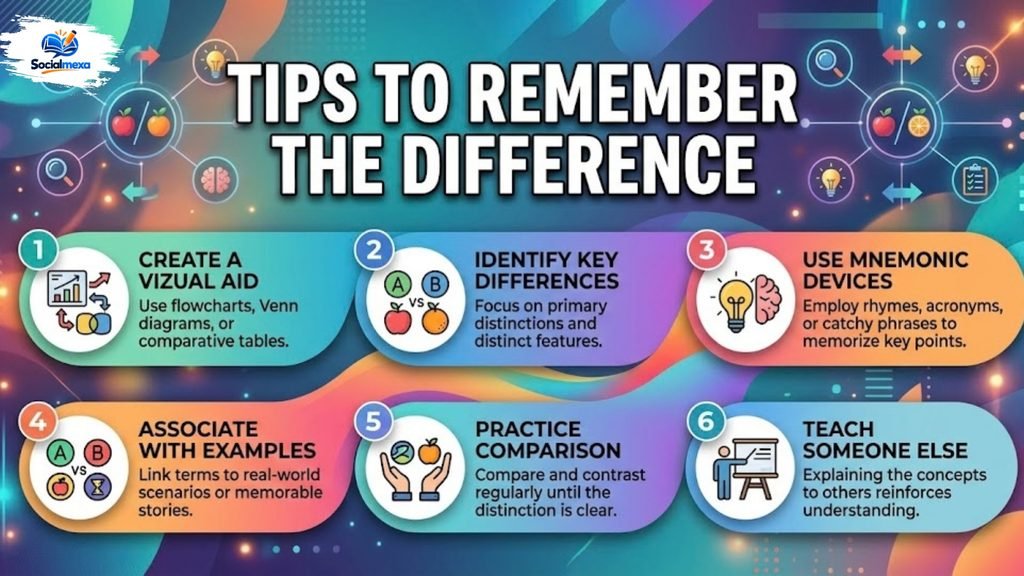
Good rules need good memory tricks. Pick the one that fits how your brain works.
1. Action = Two Words
If someone does it, give it room. Two words for two moving parts: “I follow up.”
2. Thing = Hyphen
If you can hold it, send it, or schedule it, connect it. “A follow-up” is one object.
3. Avoid One Word
When you doubt the one-word version, skip it. Nobody ever lost points for writing follow-up correctly.
4. Replace Test
Swap in a stand-in word. If “continue” or “check back” fits, use follow up. If “next step” or “second message” fits, use follow-up.
Followup or follow up appointment
Appointments are the most searched version of this question, so here is the direct answer. Write follow-up appointments with a hyphen. The word “follow-up” describes the appointment, so it works as an adjective.
- Correct: “I booked a follow-up appointment for Thursday.”
- Correct: “The clinic will call to follow up on your results.”
- Incorrect: “I booked a follow up appointment.”
Same rule, different setting. The clinic example also shows both forms side by side without any conflict.
When to Use Each Word
If you want a fast decision guide, use the lists below.
Use “Follow Up” When:
- The word describes an action.
- A helper verb comes before it, such as will, can, should, or must.
- You can change the tense: follows up, followed up, following up.
Use “Follow-up” When:
- The word names something, like a call, visit, or message.
- It describes another noun, like a follow-up task.
- An article such as a, an, or the comes before it.
Avoid “Followup” When:
- You write for work, school, or publication.
- You write medical, legal, or business documents.
- You want your spelling to match major style guides.
Grammar Rules
The logic behind the pattern is simple English grammar. English often creates a noun from a phrasal verb by joining the parts, usually with a hyphen or as one word. Think of “check in” and “check-in,” or “set up” and “setup.” The verb stays open. The noun closes up.
That pattern explains why people get confused. Some pairs now use a closed noun, like “setup,” while “follow-up” kept its hyphen in most style guides.
1. Verb Form (No Hyphen)
Keep the verb open: “I will follow up.” The two words work as separate parts, so each one can carry its own meaning.
2. Noun/Adjective Form (Hyphenated)
Add the hyphen: “a follow-up,” “a follow-up call.” The hyphen tells readers the two words belong together.
3. Avoid Single Word
Stay away from followup in careful writing. If you manage a system that uses it as a field name, keep it there, but write the hyphenated form for people.
Synonyms or Related Words
Sometimes the best fix is a different word. Synonyms keep your writing fresh when “follow up” shows up four times in one email.
For “Follow Up” (Verb):
- check in
- circle back
- touch base
- revisit
- pursue
- get back to
For “Follow-up” (Noun):
- reminder
- second contact
- next step
- check-in
- continuation
- sequel
Frequently Asked Questions
Which is correct, followup or follow up?
Both follow up and follow-up are correct, depending on the job. Use follow up for the verb and follow-up for the noun or adjective. Followup is nonstandard in most formal writing.
Will follow up or follow up?
Write “will follow up.” The word “will” comes before a verb, so you need the two-word form. Example: “I will follow up on Monday.”
Does followup need a hyphen?
As a noun or adjective, yes. The correct spelling is follow-up. As a verb, no hyphen is needed, and you write follow up as two words.
What does followup mean?
It means a later action or contact that builds on an earlier one. A follow-up might be a second email, a doctor visit, a question, or a meeting. The word always points back to something that happened first.
Conclusion
The confusion around followup or follow up fades once you remember the swap: action gets a space, thing gets a hyphen. Say “I will follow up” when you act. Say “I sent a follow-up” when you name the thing. Skip the one-word version in anything that matters.
Now you can send that email without squinting at the screen. Go ahead and follow up.

Emily Carter is an English language writer who creates simple guides on grammar, word meanings, spelling, slang, and everyday English. Her goal is to make confusing language topics clear, practical, and easy to understand.
5 thoughts on “Followup or Follow Up? Get It Right Every Time”