


You typed it. You stared at it. It looked wrong. Now you are stuck wondering whether the correct spelling is “lieing” or “lying,” and Google is not exactly giving you a straight answer. Good news: there is only one correct spelling, and it takes ten seconds to learn. Once you see the simple rule behind it, you will never second guess this word again.
Lieing or Lying – Quick Answer

The correct spelling is “lying.” “Lieing” is always incorrect, no matter which meaning you intend. Whether you mean resting horizontally or telling an untruth, “lying” is the only accepted spelling in both British and American English.
The confusion happens because the base verb “lie” ends in “ie,” and most people assume you just add “ing.” English grammar has a specific rule for verbs like this, and it changes the spelling.
Lieing or lying down
If you are describing the act of resting in a horizontal position, the phrase is “lying down,” not “lieing down.” For example: “She was lying down on the couch after a long shift.” This is one of the most searched phrases related to this word, and the spelling rule stays the same regardless of context.
What Is “Lieing”?
“Lieing” is a common misspelling. It does not appear in any major English dictionary, including Merriam-Webster or Oxford. People write it because they follow the pattern of words like “seeing” or “dyeing,” where the “e” is kept before “ing.” Unfortunately, “lie” follows a different rule entirely, which we will break down shortly.
| Explore More Articles |
| Monkeys or Monkies? The Correct Spelling You Need to Know |
| Realy or Really: Which Spelling Is Correct? |
| Emphasize or Emphasise: Which Spelling Is Correct UK vs USA |
What Is “Lying”?
“Lying” is the correct present participle and gerund form of the verb “lie.” It has two completely different meanings depending on context, and English speakers rely on sentence context to tell them apart.
Meaning 1: To Be in a Horizontal or Resting Position
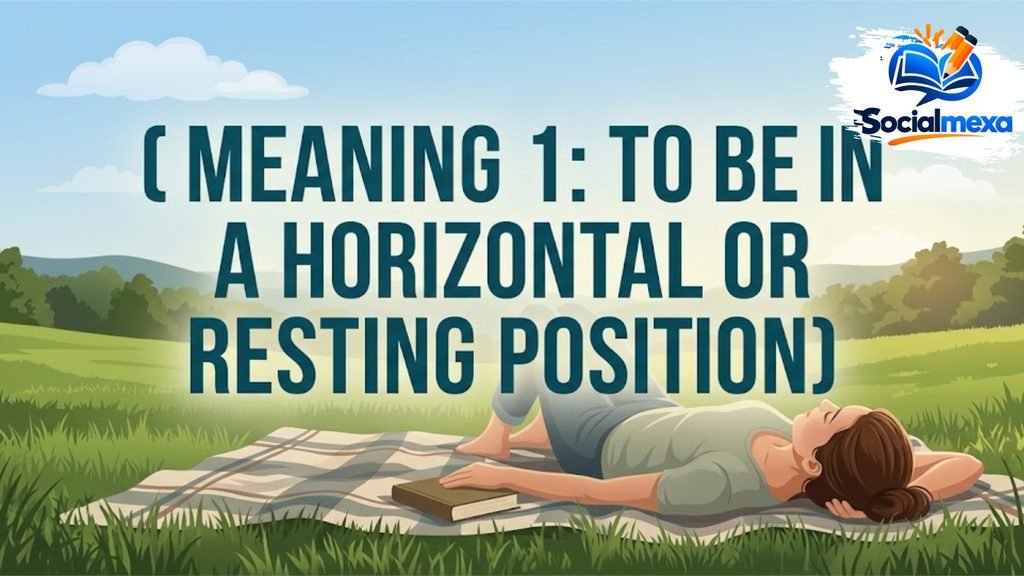
This meaning relates to the verb “lie” (not “lay”), describing a body or object at rest.
Example: “The cat was lying in the sun for hours.”
Meaning 2: To Tell an Untruth
This meaning relates to dishonesty or saying something false.
Example: “He was lying about where he had been all night.”
Both meanings share the exact same spelling once you add “ing.” Only the sentence around the word tells you which meaning is intended.
Lieing or lying examples
Here are quick side-by-side examples showing correct usage in real sentences:
- “Stop lying to me about the budget.” (untruth)
- “The dog is lying near the fireplace.” (position)
- “She admitted she had been lying for weeks.” (untruth)
- “He spent the afternoon lying on the beach.” (position)
Notice how “lieing” never appears in any dictionary example or professional writing. That is your biggest clue that it is wrong.
Lieing or Lying – The Grammar Rule Explained
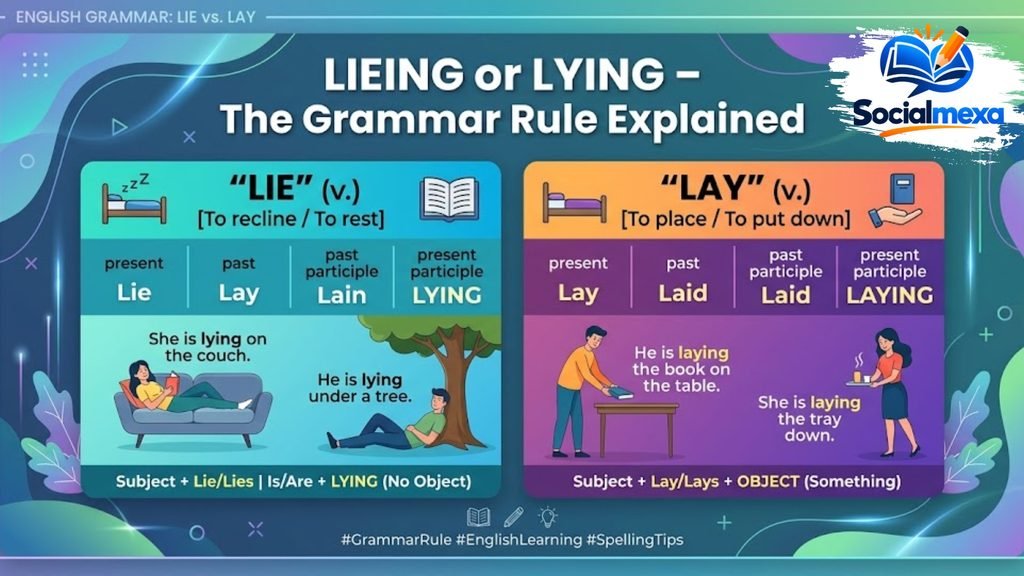
English has a small set of verbs ending in “ie,” such as “lie,” “die,” and “tie.” When you add “ing” to these verbs, the spelling changes in a predictable way.
The -IE to -Y Rule
Here is the rule in plain terms: when a verb ends in “ie,” drop the “e” and change the “i” to “y” before adding “ing.”
- lie → lying
- die → dying
- tie → tying
This rule exists because English avoids stacking three vowels together (“i,” “e,” and “i” from “ing”). Swapping the “ie” for a “y” keeps the word easier to read and pronounce. Once you memorize this one rule, every similar verb becomes automatic.
Lieing or lying meaning
The meaning of “lying” depends entirely on context, as shown earlier. As a general rule, if the sentence involves furniture, floors, beds, or physical position, it means resting. If the sentence involves honesty, secrets, or statements, it means being dishonest. Native speakers rarely confuse the meanings because context makes it obvious within the first few words of a sentence.
The Origin of Lieing or Lying
The verb “lie” traces back to Old English “licgan,” meaning to recline or rest, and separately to “leogan,” meaning to speak falsely. These were originally two different Old English verbs that happened to evolve into the same modern spelling: “lie.” Over centuries of language change, both meanings merged into one written form, while the spoken and written distinction stayed clear through context alone. The “-ing” form followed standard Middle English spelling shifts, eventually settling into “lying” for both senses by the time modern English rules were standardized.
British English vs American English Spelling
Here is some good news: there is no difference between British and American English on this word. Both dialects spell it “lying” in every context. Unlike words such as “colour” versus “color,” this is one spelling rule that unites English speakers worldwide. If you have seen “lieing” anywhere online, it is simply a typo, not a regional variation.
Lieing or lying in bed
“Lying in bed” is the correct phrase, and it strictly refers to the position’s meaning. Example: “I spent Sunday morning lying in bed with a cup of coffee.” Many people confuse this with “laying in bed,” which is also common but grammatically shaky, since “lay” technically requires an object (you lay something down; you do not lay yourself down in casual grammar terms). We will cover that mix-up next.
Lieing or lying on the floor
The same rule applies here. “Lying on the floor” describes a resting position, as in: “The kids were lying on the floor playing video games.” Again, “lieing” is never correct, and swapping in “laying” changes the grammatical structure of the sentence, even though many native speakers use “laying” casually in everyday conversation.
Lieing or lying grammar
From a pure grammar standpoint, “lying” is the only accepted present participle of “lie” in both major meanings. “Lieing” fails basic English spelling conventions and will be marked incorrect in any grammar check, school assignment, or professional document. If you remember one grammar fact from this entire article, remember this: “ie” verbs drop the “e” and swap “i” for “y” before “ing.”
Which Spelling Should You Use?

Always use “lying.” There is no situation, formal or informal, academic or casual, where “lieing” is acceptable. If your spell checker has not already flagged “lieing” in red, it is worth double checking your settings, because it should.
Lieing or lying not telling the truth
When your sentence is about dishonesty, “lying” is your word. Example: “Lying about your qualifications on a resume can get you fired.” This is the more emotionally loaded meaning, often tied to trust, relationships, and integrity, which is likely why so many people search this phrase while trying to confirm the correct spelling before sending an important message or writing an essay.
Common Mistakes with Lieing or Lying
Beyond the basic “lieing” typo, there are a few related mistakes worth clearing up.
Mistake 1: Confusing “Lying” with “Laying”
“Lay” requires a direct object; “lie” does not. You lay a book on the table, but you lie down on the couch. In casual speech, people blend these constantly, but in formal writing, the distinction matters.
Mistake 2: Getting the Past Tense Wrong
The past tense of “lie” (resting) is “lay,” and the past participle is “lain.” The past tense of “lie” (dishonesty) is “lied,” and the past participle is also “lied.” Yes, this is confusing, and yes, even native speakers get it wrong regularly.
Mistake 3: Writing “Dieing” Instead of “Dying”
Since “die” follows the same “ie” to “y” pattern, people make the identical mistake with this word. The correct form is always “dying,” never “dieing.”
Lieing or Lying in Everyday Examples

- Text messages: “Are you lying to me right now?”
- Yoga instructions: “Begin lying flat on your back.”
- News headlines: “Executive accused of lying to investors.”
- Children’s stories: “The fox was lying under the old oak tree.”
Seeing the word in real, everyday contexts helps cement the correct spelling in your memory far better than any rule alone.
Lieing or lying quiz
Test yourself with these quick fill-in-the-blank sentences. Answers are listed right after.
- She was _____ about her age.
- The dog is _____ on the porch.
- He kept _____ to avoid trouble.
- They were _____ in the grass, watching clouds.
Answers: 1. lying, 2. lying, 3. lying, 4. lying. Every single blank uses the exact same spelling, which is really the whole point of this article.
Lieing or Lying – Google Trends & Usage Data
Search interest for “lieing or lying” spikes consistently, showing that thousands of people type “lieing” into search engines every month while trying to confirm the correct spelling. Dictionary and grammar sites report this as one of the most frequently searched spelling confusions tied to “ie” verbs, alongside “tieing” versus “tying.” Despite the search volume for “lieing,” it has never gained acceptance in any published dictionary, confirming that it remains a spelling error rather than an alternate form.
Comparison Table: Lieing vs Lying
| Feature | Lieing | Lying |
| Dictionary recognized | No | Yes |
| Correct spelling | No | Yes |
| Used in formal writing | Never | Always |
| Grammar checkers accept it | No | Yes |
| British and American English | Not applicable | Correct in both |
Frequently Asked Questions
Is it spelled lieing or lying?
It is always spelled “lying.” “Lieing” is a common misspelling and is never correct in any English dialect.
Is it laying or lying in bed?
Technically, “lying in bed” is correct for describing your own position at rest. “Laying” requires a direct object, so “laying in bed” is grammatically inconsistent, even though it is widely used in casual speech.
What does “lying” mean?
“Lying” has two meanings: resting in a horizontal position, or telling something untrue. Context determines which meaning applies in a given sentence.
Is it lying down or lieing down?
“Lying down” is correct. “Lieing down” is a spelling error and should be avoided in all writing.
Conclusion
At the end of the day, this one comes down to a simple spelling rule: verbs ending in “ie” drop the “e” and swap the “i” for a “y” before adding “ing.” That single rule turns “lie” into “lying,” “die” into “dying,” and “tie” into “tying.” So the next time your fingers want to type “lieing,” picture that rule and let “lying” take over instead. Your grammar checker, your teacher, and your future self will all thank you.

Emily Carter is an English language writer who creates simple guides on grammar, word meanings, spelling, slang, and everyday English. Her goal is to make confusing language topics clear, practical, and easy to understand.
5 thoughts on “Lieing or Lying? Discover the Correct Spelling Now”