

Speach or Speech
You typed “speach” into a sentence, paused, and felt that nagging doubt. Is it right? Should there be an extra letter somewhere? You are not alone. This tiny mix up trips up native speakers and learners alike every single day.
Here is the short answer before we go any further. “Speech” is the correct spelling. “Speach” is not a real word in English, no matter how it sounds when you say it out loud.
Let’s clear up the confusion for good, and by the end you will never second guess this word again.
Speach
“Speach” looks like it should work. It follows the same sound pattern as “teach” or “reach.” Your brain hears the word and your fingers just fill in the blank the way they know best.
But English spelling rarely plays fair. “Speach” is simply a misspelling. You will not find it in any dictionary, and using it in an email or essay will make your writing look careless.
Speech
“Speech” is the noun that refers to spoken language, a formal talk, or the ability to talk at all. A student gives a speech in class. A baby develops speech during the first few years of life. A politician’s speech gets fact checked the next morning.
This is the version you want every time.
Speach or speech in english
In standard English, both American and British, only one spelling survives: speech. There is no regional variant, no old fashioned version, and no acceptable alternate spelling of “speach” anywhere in modern usage.
If you search old texts you might spot unusual spellings from centuries ago, but that has no bearing on how we write today.
Speach or Speech – Quick Answer
Here is the answer stripped down to basics, so you can bookmark this and move on with your day.
- Correct spelling: speech
- Incorrect spelling: speach
- Part of speech: noun
- Pronunciation: “speech” rhymes with “reach” and “teach”
Examples:
- She practiced her graduation speech for a week.
- His speech was full of humor and honesty.
- Freedom of speech is protected in many countries.
The Origin of Speech
The word “speech” comes from the Old English term “spæc” or “spece,” which itself grew out of a Germanic root meaning “to speak.” Over centuries, English spelling shifted and settled, and “speech” became the fixed, standard form we use now.
Interestingly, the verb “to speak” and the noun “speech” share the same ancient root, even though they look quite different today. That is one of the quirks of English. Related words do not always spell themselves the same way.
| Explore More Articles |
| Lieing or Lying? Discover the Correct Spelling Now |
| Skis or Skiis? Discover the Correct Spelling & Meaning |
| Opening or Openning? Get the Correct Spelling Now |
Speach or speech therapy
This is one of the most searched versions of this mistake, and it makes sense. Parents searching for help with a child’s language development often type quickly and without thinking twice.
The correct term is speech therapy, which refers to professional treatment that helps people improve how they talk, pronounce words, or communicate after an injury or developmental delay. A speech therapist, sometimes called a speech language pathologist, works with both children and adults.
If you are searching for help online, always use “speech therapy” to get accurate results. Typing “speach therapy” may still pull up results because search engines are smart, but the spelling itself remains wrong.
British English vs American English Spelling
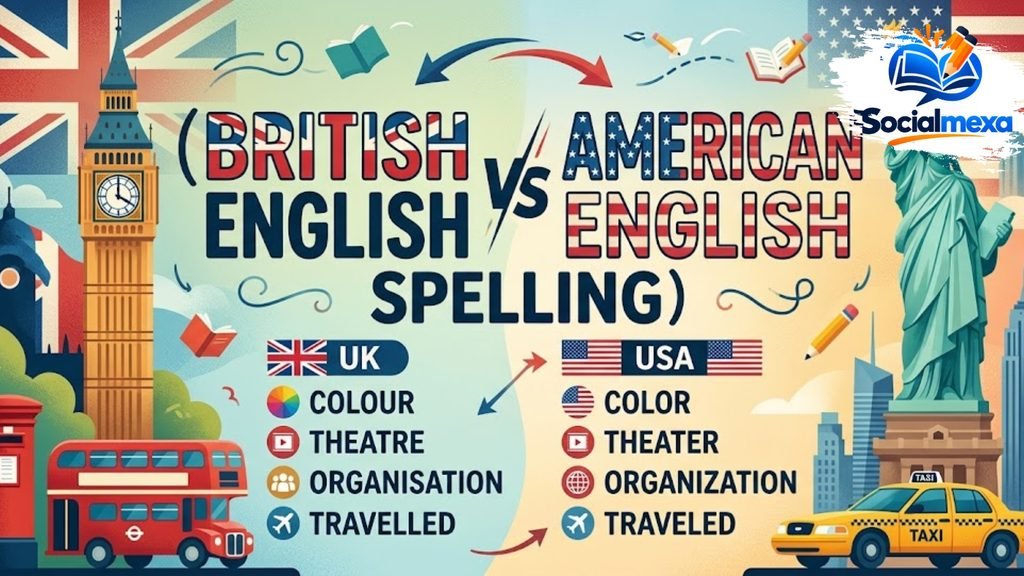
Good news here. Unlike words such as “color” and “colour,” or “organize” and “organise,” this one does not split by region. Both British and American English agree completely.
Comparison Table
| Region | Correct Spelling | Incorrect Spelling |
| American English | speech | speach |
| British English | speech | speach |
| Canadian English | speech | speach |
| Australian English | speech | speach |
No matter where your reader lives, “speech” is always right.
Speach or speech for students
For students, spelling this correctly matters more than it might seem. Teachers often deduct marks for basic spelling errors, and “speach” is one of the more common ones flagged in essays, applications, and class assignments.
A simple trick that helps students remember: think of the phrase “each speech reaches an audience.” Notice how “each,” “speech,” and “reaches” all share that same “ea” sound and spelling pattern.
Which Spelling Should You Use?
Always use speech. There is no situation, formal or informal, academic or casual, where “speach” is the accepted spelling. If you see it written that way anywhere, including on social media or in casual texts, it is simply an error, not an alternate style.
Speach or speech for students in English
For English language learners specifically, the confusion often comes from how English pairs sounds with letters inconsistently. In many other languages, spelling matches pronunciation closely. English does not offer that same courtesy.
The best way to lock this in is repetition. Write the sentence “I gave a speech” five times. Say it out loud while you write it. Your hand and your ear will start to agree with each other.
Speach or speech grammar
Grammatically, “speech” functions as a countable and uncountable noun depending on context.
- Countable: “She delivered three speeches this week.” (Multiple specific talks)
- Uncountable: “Speech is a basic human ability.” (The general concept of talking)
There is no verb form of “speech.” If you want to describe the action of talking, you use “speak,” “spoke,” or “spoken,” never “speech” as a verb.
Common Mistakes with Speech
Beyond the spelling itself, people mix up related forms too. Here are the most frequent slip ups.
Corrections:
- Wrong: He speach very clearly. Right: He speaks very clearly.
- Wrong: She has given many speach. Right: She has given many speeches.
- Wrong: I need to improve my speach. Right: I need to improve my speech.
- Wrong: The teacher speach to the class. Right: The teacher speaks to the class.
Notice the pattern. “Speech” stays fixed as a noun. The verb changes form depending on tense, but it is always built from “speak,” never from “speach.”
Speech in Everyday Examples

Seeing this word in real contexts helps it stick better than any rule ever will.
1. Emails
“Please find attached the final draft of my speech for tomorrow’s meeting.”
2. News
“The president’s speech addressed rising concerns about the economy.”
3. Social Media
“I just finished writing my wedding speech and I already need tissues.”
4. Formal Writing
“Freedom of speech remains one of the most debated topics in modern law.”
Speach or speech quiz
Test yourself quickly. Pick the correct spelling in each sentence.
- Her graduation (speach/speech) made everyone cry.
- The therapist specializes in (speach/speech) therapy for toddlers.
- He struggled with public (speach/speech) in high school.
- The (speach/speech) was short but powerful.
If you answered “speech” for all four, you have officially mastered this one.
Speech – Google Trends & Usage Data

Search data consistently shows that “speech” dominates search volume, while “speach” appears almost entirely as a typo entered by users who then get corrected by search engines or autocorrect tools. Search engines like Google recognize this pattern and often display “Did you mean: speech” whenever someone types the incorrect version, which confirms just how widespread this small mistake really is.
Speach or speech examples
To really cement this, here are a few more sentences using the correct word in different tones and settings.
- Casual: “Dude, your best man’s speech was hilarious.”
- Professional: “The CEO’s opening speech set the tone for the entire conference.”
- Academic: “Students analyzed the rhetorical structure of the speech in class.”
- Historical: “Winston Churchill’s wartime speeches are still studied today.”
Comparison Table: Speach or Speech
| Feature | Speech | Speach |
| Correct English word | Yes | No |
| Found in dictionaries | Yes | No |
| Used in formal writing | Yes | Never |
| Common typo | No | Yes |
| Grammatically valid | Yes | No |
Is speach a word
No, “speach” is not a word. It does not appear in any major English dictionary, including Merriam Webster, Oxford, or Cambridge. It is purely a spelling error caused by the mismatch between how “speech” sounds and how English typically spells similar words.
If autocorrect has not caught it for you yet, now you know to catch it yourself.
FAQs About Speach or Speech
Why is it speech and not speach?
English spelling developed from Old English roots where the “ee” sound in this word was represented by “ee,” not “ea.” Over time, this spelling became fixed as “speech,” while “speach” never existed as an accepted form.
What is the meaning of speach?
“Speach” has no meaning because it is not a real word. The intended meaning is almost always “speech,” referring to spoken words or the ability to talk.
How do you write a speach?
If you mean how to write a speech, start with a clear opening, build your main points with examples or stories, and close with a memorable takeaway. And remember to spell it “speech,” not “speach.”
What is called a speech?
A speech is a formal talk delivered to an audience, usually to inform, persuade, or entertain. It differs from casual conversation because it is typically prepared in advance and delivered to a group.
Conclusion (Speach or Speech)
So there you have it. “Speech” is correct, “speach” is not, and now that little doubt in your head can finally rest easy. Whether you are writing a graduation speech, searching for speech therapy resources, or just texting a friend, stick with the spelling that dictionaries and grammar rules actually recognize.
The next time your fingers try to type “speach,” you will catch it before it even hits the page.

Emily Carter is an English language writer who creates simple guides on grammar, word meanings, spelling, slang, and everyday English. Her goal is to make confusing language topics clear, practical, and easy to understand.
5 thoughts on “Speach or Speech? Discover the Correct Spelling”